
Asymmetric Escalation: The North Korea Hwasong-11 Ra Test
On Sunday, April 19, 2026, North Korea’s Missile Administration conducted a high-density strike test of the Hwasong-11 Ra, a tactical ballistic missile designed to rain “steel rain” over South Korea. Observed by Kim Jong-un and his daughter, Kim Ju-ae, the launch utilized improved warheads containing cluster munitions and fragmentation mines. These weapons are categorized as “asymmetric” because they allow Pyongyang to counter the superior missile defense systems of the U.S. and South Korea by saturating wide areas with lethal submunitions.
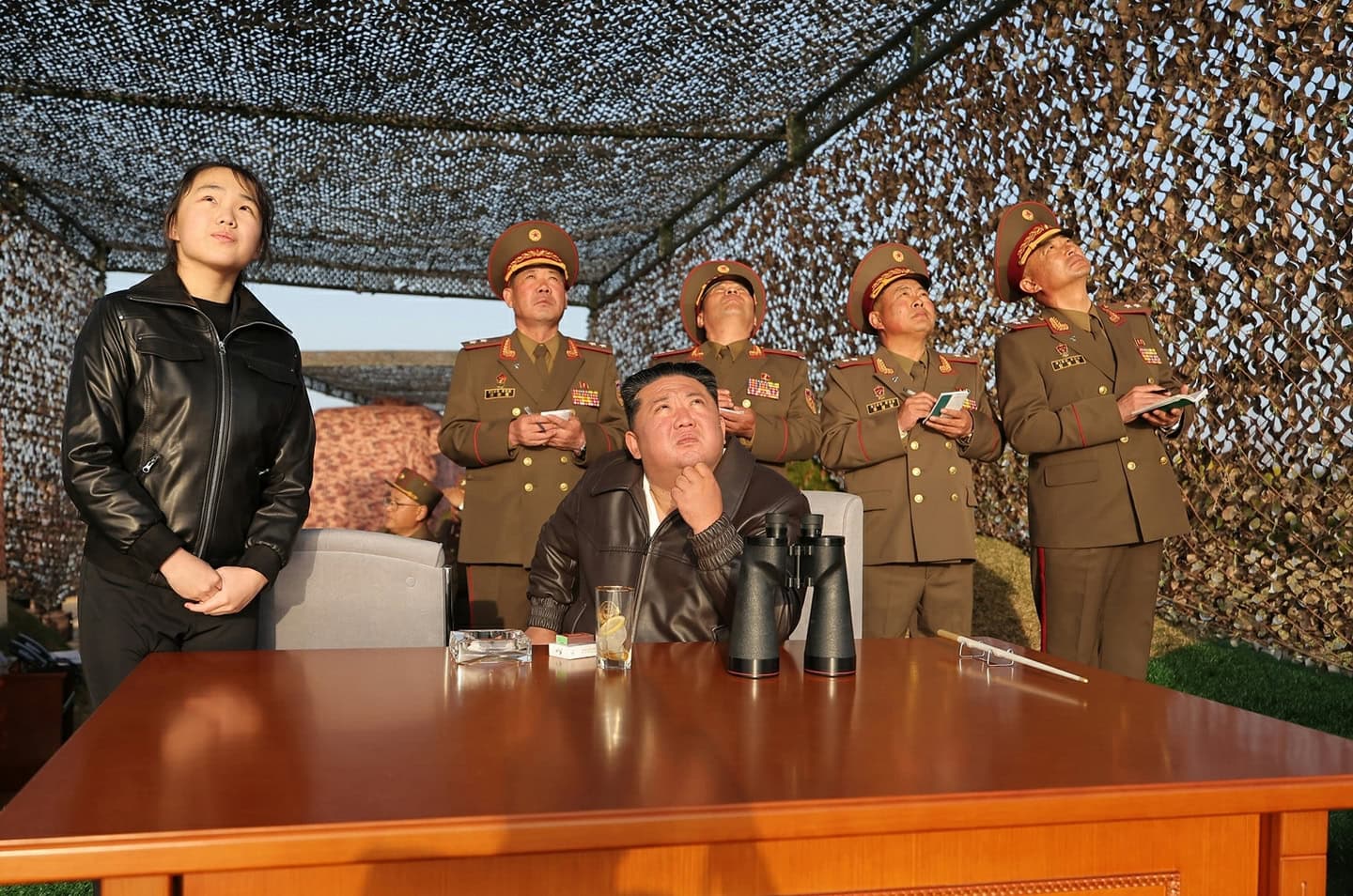
“Steel Rain” Over Seoul: Maximum Lethality in Minutes
The North Korea Hwasong-11 Ra test demonstrated a terrifying reach. With a range of approximately 140 kilometers (87 miles), the missile can strike the heart of Seoul, Gyeonggi Province, and the Osan Air Base within minutes of launch.
-
Cluster Munitions: These disperse hundreds of small bombs over an area of 12.5 to 13 hectares (roughly 32 acres), maximizing damage to personnel and unarmored vehicles.
-
Fragmentation Mines: Similar to the U.S. “Fascam” system, these scatterable mines can instantly block military maneuver routes, preventing U.S. and South Korean reinforcements from reaching the front lines.
The Ukraine Connection: A Real-World Weapons Lab
Analysts suggest that Kim Jong-un is closely monitoring the efficacy of similar weapons in the ongoing Ukraine and Middle East conflicts. By testing the North Korea Hwasong-11 Ra now, Pyongyang is not only refining its own frontline combat power but also enhancing its “export portfolio” for Russia. North Korea has reportedly been supplying the KN-23 family of missiles to Moscow, using the battlefields of Ukraine as a laboratory to perfect its tactical systems against Western-made defenses.
With the planned deployment of 250 transporter erector launchers (TELs)—capable of firing a simultaneous salvo of 1,000 missiles—the addition of cluster warheads represents a significant leap in North Korea’s ability to conduct a prolonged war of attrition.