The Evolution of Korean-Chinese Cuisine in LA Koreatown: From Nostalgia to Modern Landmarks
The memory of stepping onto the unfamiliar soil of Los Angeles in the late 1970s remains vivid. I remember ordering Jajangmyeon (black bean noodles) with a heart full of excitement, only to be met with a plate of raw onions and black bean paste—completely devoid of the essential Danmuji (yellow pickled radish). In those days, pickled radish was a luxury you had to purchase separately at high prices from Korean markets. We found small comfort in a side of “cabbage kimchi,” a makeshift substitute that hinted at the immigrant struggles of the time.
 The Pioneers: Kirin-won and the Golden Era of the 70s-80s
During the late 1970s and 80s, authentic Korean-Chinese restaurants in Los Angeles were few and far between. In 1978, Kirin-won established its roots on Olympic Boulevard (where TGI BBQ stands today). Its owner would later become a legendary figure in the local food scene, eventually founding the famed Yong Gung.
As the community grew, other landmarks emerged. Names like Wang Gwan, Yeon Gyeong (famous for its Gan-jajang and Tangsuyuk), and Shin Peking—which once dominated the local catering market for first-birthday parties—became household names. While some, like Man Ri Jang Seong, vanished due to urban redevelopment, they collectively paved the way for the vibrant food scene we see today.
The Jjamppong Revolution: Jin Heung Gak
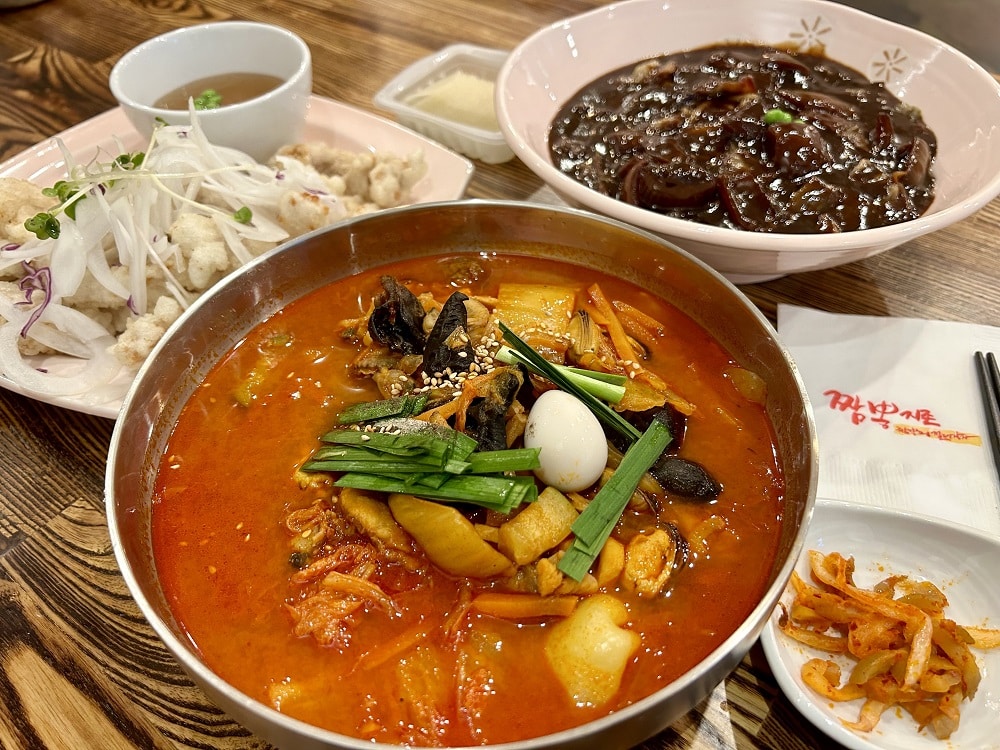
One of the most significant powerhouses alongside Kirin-won was Jin Heung Gak. Their spicy, deep-flavored Jjamppong (seafood noodle soup) became an overnight sensation. For the first time, long lines in front of Korean-Chinese restaurants became a common sight in LA.
Despite grumbling about the wait times, customers—myself included—couldn’t stay away for more than a few days, drawn back by the “magical” spicy broth. The brothers behind Jin Heung Gak expanded their empire across the 8th Street, Koreatown Plaza, and even into the Valley and Glendale, rewriting the history of Korean-Chinese dining in Southern California.
Market Shifts: Price Wars and Traditional Revivals
The industry eventually faced a seismic shift with the arrival of So-Yong Gung, which triggered intense price competition with its “low-cost Jajangmyeon” strategy. This forced established players like Jin Heung Gak to innovate and cut costs, marking a period of fierce survival in the K-Town market.
As the era of Jin Heung Gak began to fade, a demand for “old-school Jjamppong” resurfaced. Restaurants like Old School Jjamppong (located at the former Albene site on 6th Street) found massive success by offering generous portions filled with blue crabs, shrimp, and mussels. Today, that legacy of hearty hospitality continues at the same location under the name Yangji Gamjatang, a 24-hour staple of the neighborhood.
Modern Trends: Franchises and the Return of a Legend
The modern era is defined by the arrival of major Korean franchises. Hong Kong Banjum and Jjamppong Zzon on Wilshire Boulevard have successfully anchored themselves in the market, bringing consistent quality and trendy interiors that appeal to a younger demographic.
For the “solo dining” (Hon-bap) crowd, Zzamong remains a favorite for its unique “mul-jajang” style and bean sprout-rich Jjamppong. Meanwhile, Bbung has recently gained traction by increasing their serving sizes and seafood portions, satisfying the cravings of modern foodies.
In a symbolic move for the industry, the high-end restaurant Hong Yeon (formerly in the Rotex Hotel) has relocated to the historic Vermont Avenue site of the original Yong Gung. By reclaiming the “Yong Gung” name and offering a massive 500-seat capacity with premium dishes like Menbosha and Dongpo-rou, it aims to restore its status as the premier venue for community gatherings.
A Cultural Hub Beyond the Meal
The history of Chinese cuisine in LA Koreatown is a reflection of the immigrant journey—constantly evolving to meet the needs of each generation. Looking back, the absence of a single slice of pickled radish decades ago symbolized more than just a missing ingredient; it was the sorrow of displacement and a longing for home. Today, these restaurants are more than just eateries; they are vital social hubs and repositories of memories for the Korean-American community.

Columnist
Ryan Oh
President, CBC Wilshire Property