
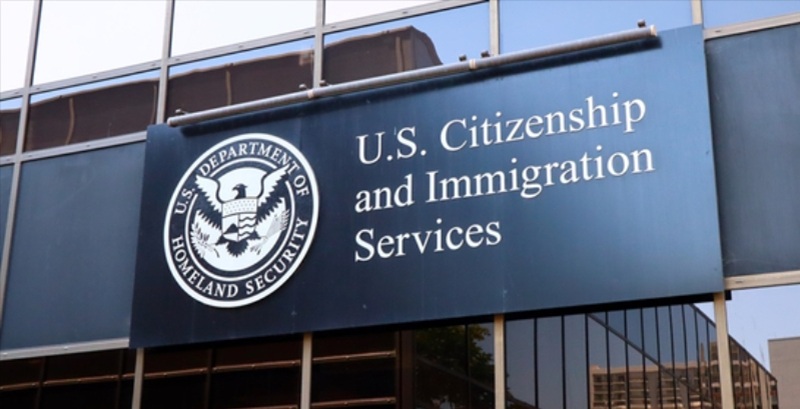
The U.S. Citizenship and Immigration Services (USCIS) is increasingly requesting additional documents from visa applicants without providing clear explanations, according to immigration attorneys.
Confusion is growing as the number of Requests for Evidence (RFEs) rises, with many notices failing to specify what is missing or what additional materials applicants must submit.
Immigration lawyers say the nature of RFEs has changed noticeably over the past year. In the past, RFEs typically identified specific missing documents or unmet requirements. Recently, however, many RFEs list only statutory provisions or policy manual language without clearly stating what needs to be corrected. In some cases, the notices do not explain why documents already submitted are considered insufficient.
Attorney Junghoon Song, an immigration lawyer, said both the frequency and the level of demands in RFEs have increased. “This trend is especially pronounced across employment-based immigration, including employment-based green cards and work visas,” he said. “Rather than pointing to a clear deficiency, many RFEs now cite vague concerns about insufficient explanation or reasoning.”
The trend is not limited to a single visa category. RFEs are increasing across a wide range of employment-based petitions, including O-1 visas for individuals of extraordinary ability, H-1B professional work visas, and employment-based green cards such as EB-1 and EB-2 National Interest Waivers (NIW).
Similar requests are being issued for employer-sponsored immigrant petitions (Form I-140). Short-term employment petitions, including Form I-129 for intracompany transferees and professional workers, are also seeing more cases placed on hold or denied.
According to USCIS data, 4,636 I-129 petitions were denied in the six months following the launch of the second Trump administration. The number of pending I-129 petitions—many delayed due to RFEs—has risen to 128,591, nearly double the 66,894 pending cases reported in December 2024, just before the administration took office.
Approval rates after RFE submissions have also declined. As of June last year, the approval rate stood at 5.8%, down sharply from the more than 8% average recorded during the Biden administration.
Some practitioners suspect increased automation in the adjudication process may be contributing to the problem. They report RFEs that assume previously submitted documents “do not exist” or cite legal provisions unrelated to the specific petition.
There has also been a rise in cases where a routine RFE is issued shortly after filing, followed by a denial despite a substantive response. Song noted that cases are increasingly moving directly to Notices of Intent to Deny (NOIDs) without an intervening RFE, while response deadlines have grown shorter, increasing the burden on applicants.
Employer-sponsored petitions are also facing heightened scrutiny over an employer’s ability to pay. Attorney Dave Noh said USCIS is sometimes demanding financial documentation beyond what policy manuals require or reviewing wages paid to other employees that were not previously at issue.
In some cases, even long-term work experience has been partially discounted, with RFEs stating that full-time employment status was “not clearly established,” despite detailed documentation.
BY HANKIL KANG [kang.hankil@koreadaily.com]
![Katy Yaroslavsky, a Los Angeles City Council member (center), speaks about addressing homelessness and strengthening public safety at a press conference on January 29. [Kyeongjun Kim, The Korea Daily]](https://www.koreadailyus.com/wp-content/uploads/2026/01/0130-Yaroslavsky-100x70.jpg "Councilmember Yaroslavsky: “LA’s homelessness policy is broken”")

![Materials from the time capsule are now on display in the lobby of the Los Angeles Central Library. [Sangjin Kim, The Korea Daily]](https://www.koreadailyus.com/wp-content/uploads/2026/01/0130-timecapsule-1-100x70.jpg "Los Angeles unveils time capsule buried 100 years ago")

