
There is a unique word in English that somehow doesn’t exist in Korean. I think we ought to change that.
It is a word of high meaning – statesman. Here’s how the English-language books define it:
A statesman or stateswoman is a respected, skilled and experienced figure. In many respects the opposite of a politician. Politicians are thought of as people who say or do things to get elected or to gain power. A statesman is someone who does everything for the common good. To call a person a statesman is a mark of high regard for that person’s integrity. An “elder statesman” is a term often defined as an older politician or advisor who is retired from office and thought to be above normal politics.
![The term “statesman” began to be used in 16th-century England, but efforts to examine the virtues associated with it date back to ancient Rome. A leading example was the philosopher Marcus Tullius Cicero (left). In the United States, George Washington is revered as a statesman. [JoongAng Photo]](https://www.koreadailyus.com/wp-content/uploads/2026/04/KikeroWashington.jpg)
In 51 BC, the famous Roman writer and philosopher Cicero published his work On the Republic. His subject was what made a true statesman. Cicero wrote that a great statesman did not have to descend from aristocracy, but he must have virtue, a sense of justice, and wisdom. He must also have dignity, temperance, generosity and be magnanimous.
Imagine my surprise when I looked up “statesman” in the English to Korean Dictionary and got this definition: 정치가. But that does not mean that Korea can’t have statesmen and that it doesn’t need them. It needs them now perhaps more than ever.
Asia, and the world, is in a time of change and maybe confusion. What is the way forward? As for Korea, it will need all the wisdom it can muster. And it should come from all sides of the political spectrum – conservative, progressive, and middle. Only coherent and consistent policies will allow Korea to be both secure and prosperous in the coming decades. And true statesmen will point out that flipping policies every few years between conservatives and progressives will not achieve coherence, consistency, security or prosperity.
My suggestion is that it is now time for Korea to be pragmatic. Leaders of all the factions making up the full political spectrum need to put aside their differences and, on the question of national security at least, sit down together and be statesman. They had better find a way for Korea to create a coherent national security strategy and implement it consistently over the coming decades, no matter which political party occupies the presidency.
As Canadian Prime Minister Mark Carney put it so colorfully in his now famous speech at Davos, if Korea as a middle power can’t use its considerable economic, political, diplomatic, and cultural assets to get itself a seat at the table, it will be on the menu. And as history shows, Korea has been too often on the menu.
The people now in power across the political spectrum must be pragmatic and come together to find the way for Korea to have a seat at the table.
We know Korea needs statesmen. Now we just have to find the right word for it in Korean.
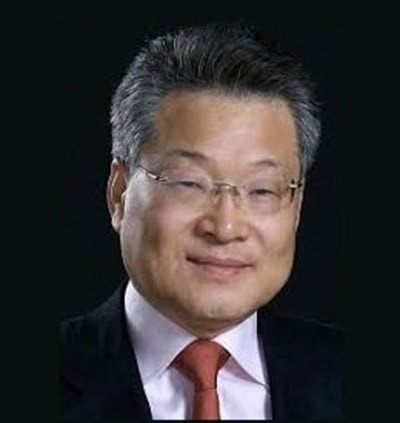 By Spencer H. Kim
The author is CEO of CBOL Corp., a California aerospace company. He is a co-founder of the Pacific Century Institute and a member of the US Council on Foreign Relations. He was appointed by President Bush to represent the US on the APEC Business Advisory Council 2006-08. He was a resident fellow at Harvard’s Ash Center for Democratic Governance and Innovation 2012-13.


![Kim Ju-ae, daughter of North Korean leader Kim Jong-un, right in the front, drives a new battle tank as Kim oversees a coordinated offensive tactical drill of infantrymen's and tankmen's subunits at the Pyongyang Training Base No. 60 under the Capital City Defence Corps of the Korean People's Army on March 19 in this photo taken from the Korean Central Television the following day. [YONHAP]](https://www.koreadailyus.com/wp-content/uploads/2026/04/0406-tank-100x70.jpg "North moving Kim Jong-un’s daughter to center of military imagery to bolster succession: NIS")