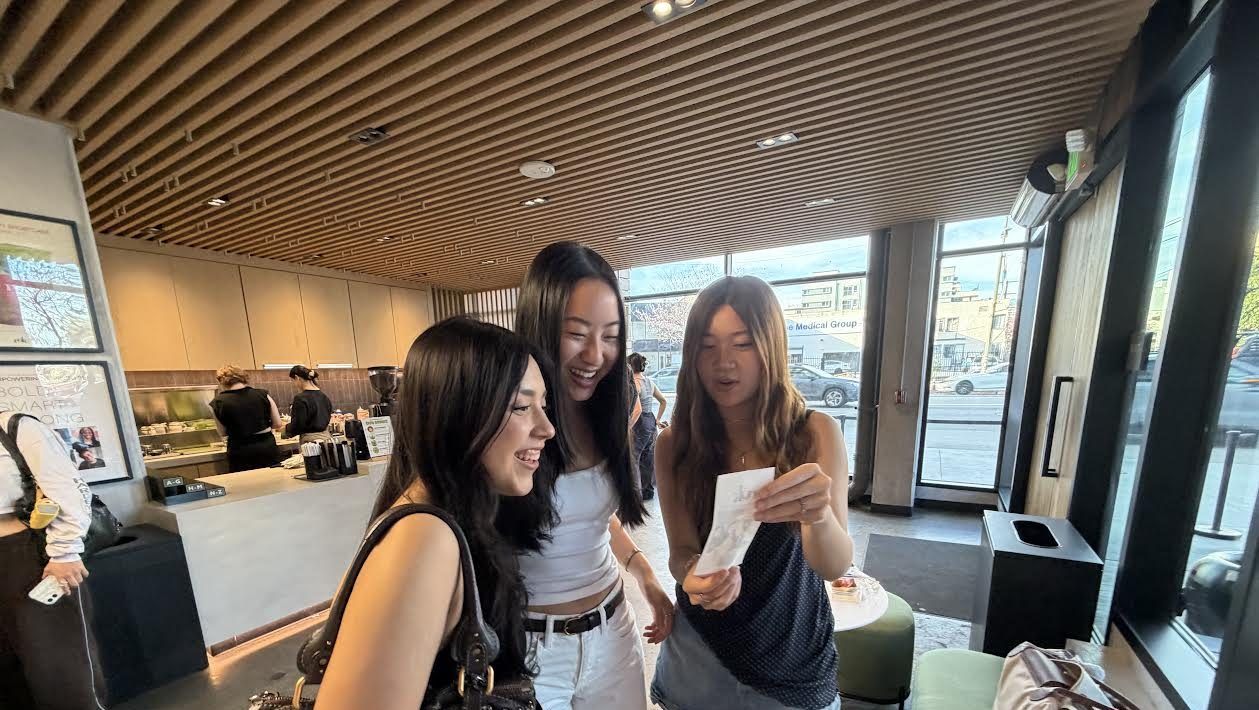
Gen-Z Angelenos are taking a ‘receipt photo’ at ROK Cafe.
There is an old saying ‘백문이 불여일견(Bak Mooni Bulyeoilguen)’ literally meaning ‘seeing something once is better than hearing about it a hundred times’. It’s like ‘proof of the pudding is in the eating’. The way we experience something shapes how deeply we understand it.
It wasn’t long ago that international phone calls between Korea and the United States were so expensive that people would say, “Let’s hang up quickly—it’s too costly.” Then came email, which once felt quite revolutionary. Today, with 5G technology enabling seamless video calls, the ways we connect and communicate have evolved dramatically.
A similar evolution is taking place in Los Angeles’ Koreatown, where Korean culture continues to reinvent itself. Experiencing something “very Korean” in the neighborhood is no longer unusual. Large Korean supermarkets and countless Korean restaurants have long made the area a cultural hub. But culture never stops evolving. Through creativity and constant reinvention, K-culture is finding new ways to connect with people in LA.
One of the most noticeable shifts is happening in K-cafes, where the focus is no longer just on coffee or dessert. Instead, the emphasis is increasingly on experience.
For Gen Z consumers, a trip to a café is no longer simply about grabbing a drink. It is about capturing a moment, sharing it online, and participating in a broader cultural trend. Coffee, desserts, photography, and social media now intersect to create a new kind of consumer experience.
Take the popular Koreatown café ‘Harucake’, for example.
Customers don’t just order lattes—they line up to use “receipt photo booths.” These thermal printers produce instant black-and-white photos on receipt paper, which visitors pin to the café walls or share on social media. A simple coffee run becomes a documented memory.
At Cafe ROK, the experience goes even further. The printed photos include QR codes that allow visitors to leave digital messages for future guests, blending physical presence with digital interaction.
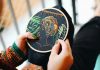
The creativity extends to the menu as well. At ‘Somemore LA’, the now-viral “Teddy Bear Latte” features a three-dimensional bear-shaped ice cube floating inside a clear cup. The drink is as much a visual experience as it is a beverage.
Owner Jed Jeong says the goal is simple: create a space where people smile, take photos, and share their joy.
These cafes are proving that in 2026, the aesthetic of a drink can be just as important as its flavor. By incorporating claw machines, message boards, and visually striking menu items, many cafés have seen a noticeable increase in foot traffic.
The trend also extends to bakeries. Concerto Bakery Cafe recently introduced the “Dubai Jjondeuk Cookie,” inspired by the viral Dubai chocolate trend. Despite its premium price—between $8 and $11—the cookie sells out daily.
For many customers, the attraction goes beyond taste. Visitors often come specifically for the “certification shot”—the photo proving they participated in the latest social media food trend.
This behavior reflects a broader shift in consumer priorities. According to Gensler’s 2024 U.S. Consumer Experience Report, consumers are twice as likely to spend money on experiences as on physical goods.
That insight may explain why LA Koreatown’s café scene is thriving. Businesses are adapting quickly to a generation that values moments, interaction, and shareable experiences.
In this new landscape, cafés are no longer just places to drink coffee. They are stages for memory-making—spaces where culture, technology, and creativity intersect.
And in LA Koreatown, the next chapter of K-culture may not be written in restaurants or markets, but in cafés where a cup of coffee comes with an experience worth sharing.
YEONGCHAE SONG [song.yeongchae@koreadaily.com] Contributed to this story.