
A Tense Silence in Pyongyang
North Korea appears to be in a state of extreme agitation following the recent joint military operation by the United States and Israel that eliminated Iran’s top leadership. While the North Korean state media has remained uncharacteristically silent about the specific details of the strike, intelligence officials and North Korean experts observe that the regime is significantly bolstering its internal security. This “tense silence” is often interpreted as a period of intense tactical analysis by Kim Jong-un’s regime, as it assesses the implications of such high-precision liquidation for its own survival.
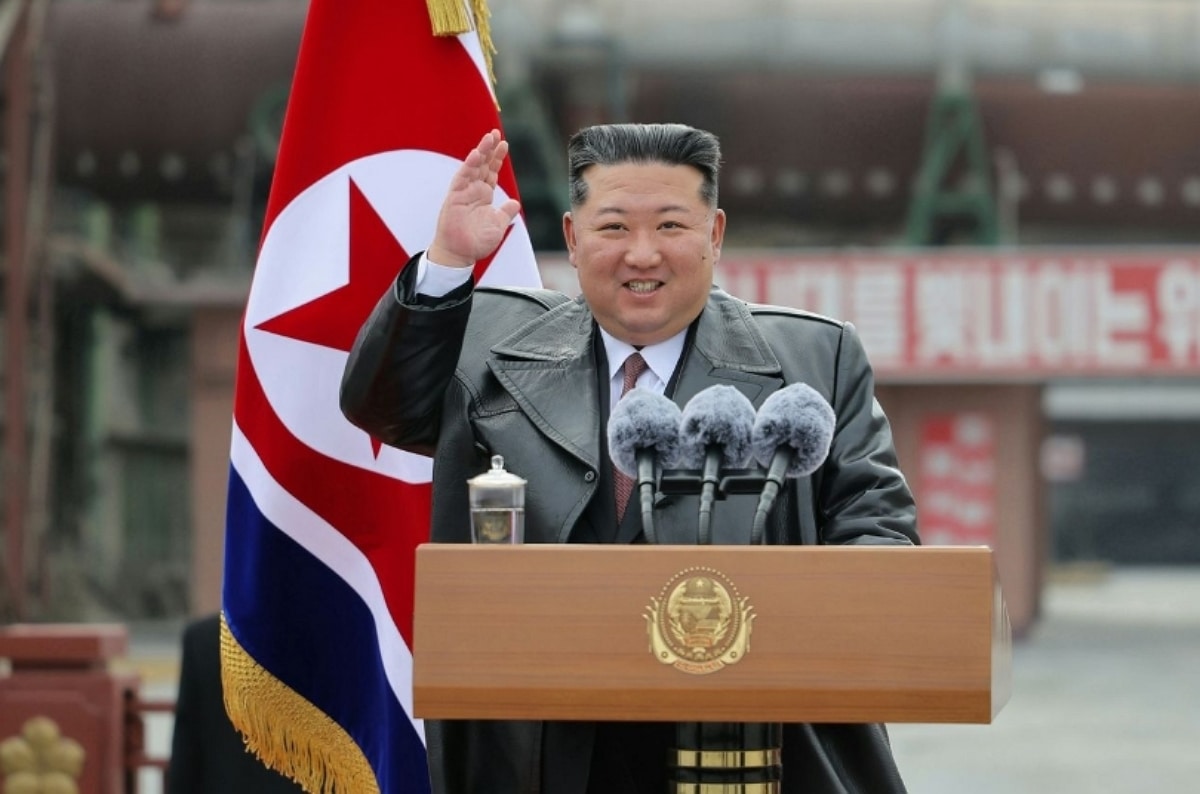 Fear of the “Decapitation Strike” Blueprint
The primary source of Pyongyang’s anxiety lies in the technical execution of the strikes. The US-Israeli operation showcased advanced satellite intelligence and unmanned aerial vehicle (UAV) technology that successfully bypassed sophisticated air defense systems. For a regime like North Korea, which prioritizes the absolute safety of its “Supreme Dignity” (Kim Jong-un), the demonstration of such surgical precision—often referred to as a “decapitation strike”—is a nightmare scenario. Experts suggest that the North Korean military is currently reviewing its own concealment and relocation protocols for high-ranking officials to counter similar threats.
Strengthening the Anti-Imperialist Front
In the wake of the strikes, North Korea is expected to strengthen its “anti-imperialist” rhetoric and deepen its ties with remaining allies. Historically, North Korea and Iran have shared a long history of military cooperation, particularly in missile technology. By viewing the fall of Iranian leadership as a shared grievance, Pyongyang may use this event to justify its continued development of nuclear and strategic weapons as “essential deterrents.” Analysts warn that this could lead to a new round of provocative missile tests or a strategic display of force to signal that the regime is not intimidated by the recent events in the Middle East.
Historical Precedents and Regime Survival
This is not the first time North Korea has reacted sensitively to the downfall of foreign leaders. Similar patterns of behavior were observed during the fall of Muammar Gaddafi in Libya and the execution of Saddam Hussein in Iraq. The North Korean leadership has long used these historical examples as a justification for never relinquishing its nuclear arsenal. The sudden elimination of the Iranian leadership serves as a fresh reminder to Kim Jong-un that conventional military strength is insufficient against precision-guided, intelligence-led warfare, likely accelerating the North’s pursuit of more advanced, asymmetric military capabilities.