
Children at the Skirball Cultural Center eagerly scoop animal “poop,” hoist food crates with pulleys, and crawl through rope nets inside a towering wooden ark. The play is joyful and physical, and after a quiet reopening in mid-December, the beloved Noah’s Ark exhibit now asks young visitors to think about what happens after the storm.
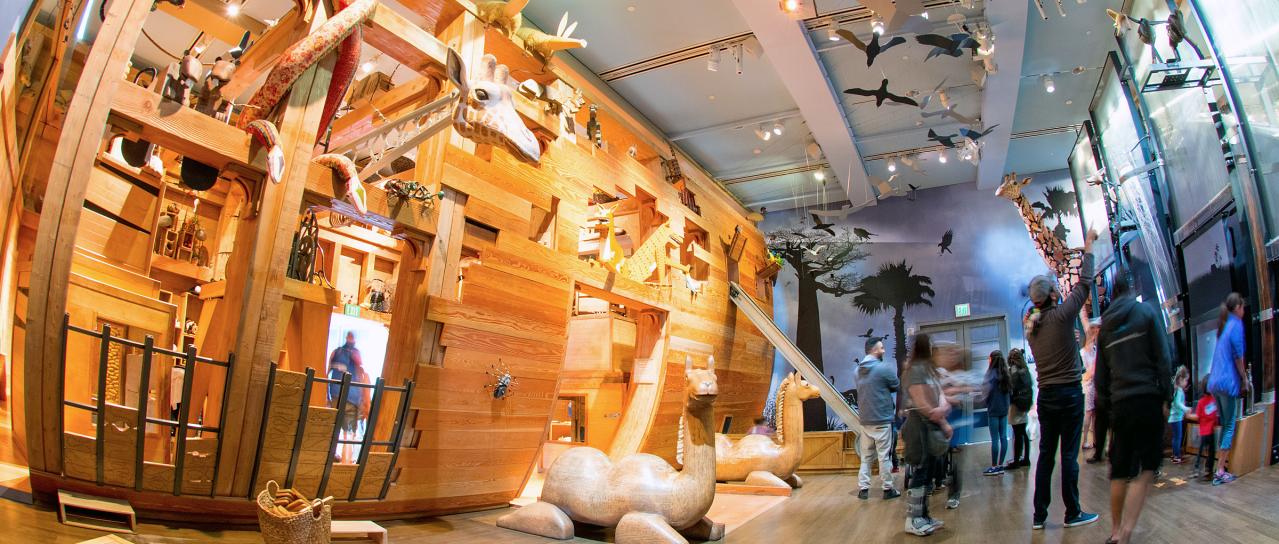
Closed for more than three months for renovation, the 18-year-old interactive exhibit has been refreshed with immersive theatrical lighting, enhanced gallery spaces, and new hands-on features according to the Los Angeles Times. Children can slide out of the ark, gather around a watering hole for animal puppets that have reached dry land, and curl up inside a massive olive tree designed as a sheltered nook.
At the center of the renovation is the reimagined Bloom Garden, an outdoor space that reframes the biblical flood story as a lesson in responsibility and care. “The goal is not to change the story, but to bring forward a chapter that’s always been there,” said Rachel Stark, vice president of education and family programs at the Skirball Cultural Center. “That moment after the storm, when the work begins.”
Designed by biodynamic farmer and educator Daron Joffe, known as Farmer D, the garden replaces a simpler ornamental landscape with native, edible, and medicinal plants, along with fruit trees such as mulberry and pineapple guava. A shallow stream winds through the space, encouraging children to splash and explore, while hammocks, sand tables, and raised beds invite rest and curiosity.
The garden is organized around Ned Kahn’s existing Rainbow Arbor, a 100-foot-long sculpture whose mist sprayers create rainbows in sunlight. Families are encouraged to touch, smell, and taste fresh herbs growing nearby. “It’s an inviting space for kids to engage in nature play,” Joffe said, noting children often wander through barefoot.
Designed to support pollinators and biodiversity, the Bloom Garden will be cultivated long-term by Shemesh Farms, which employs adults with diverse abilities. The Skirball also plans to expand the space through a Getty Global Art and Sustainability Fellowship focused on art and ecology. The garden includes the seven plant species central to Jewish tradition—wheat, barley, grapes, figs, pomegranates, olives, and dates.
Inside the ark, children carry animal puppets through rooms devoted to feeding, bathing, and cleaning. Climbing nets lead to the rafters, where pulley systems allow supplies to be shared between children above and below. The final chapter unfolds when visitors step off the ark and into the garden, moving from survival to stewardship.
Since opening, Noah’s Ark has welcomed more than a million visitors, drawing about 50,000 people each year. For many families, it is a place of memory and return. “It is a beloved place,” Stark said. “Visitors grew up coming here, and now they bring their kids and their grandkids.”