
Gavin Newsom is entering his final year as California governor with his national ambitions looming and many of his most ambitious promises still unresolved according to CalMatters. As he prepares to address the Legislature and present his budget proposal this week, interest groups across the state are pressing him to pass favored policies, block regulations they oppose, and protect programs they support.
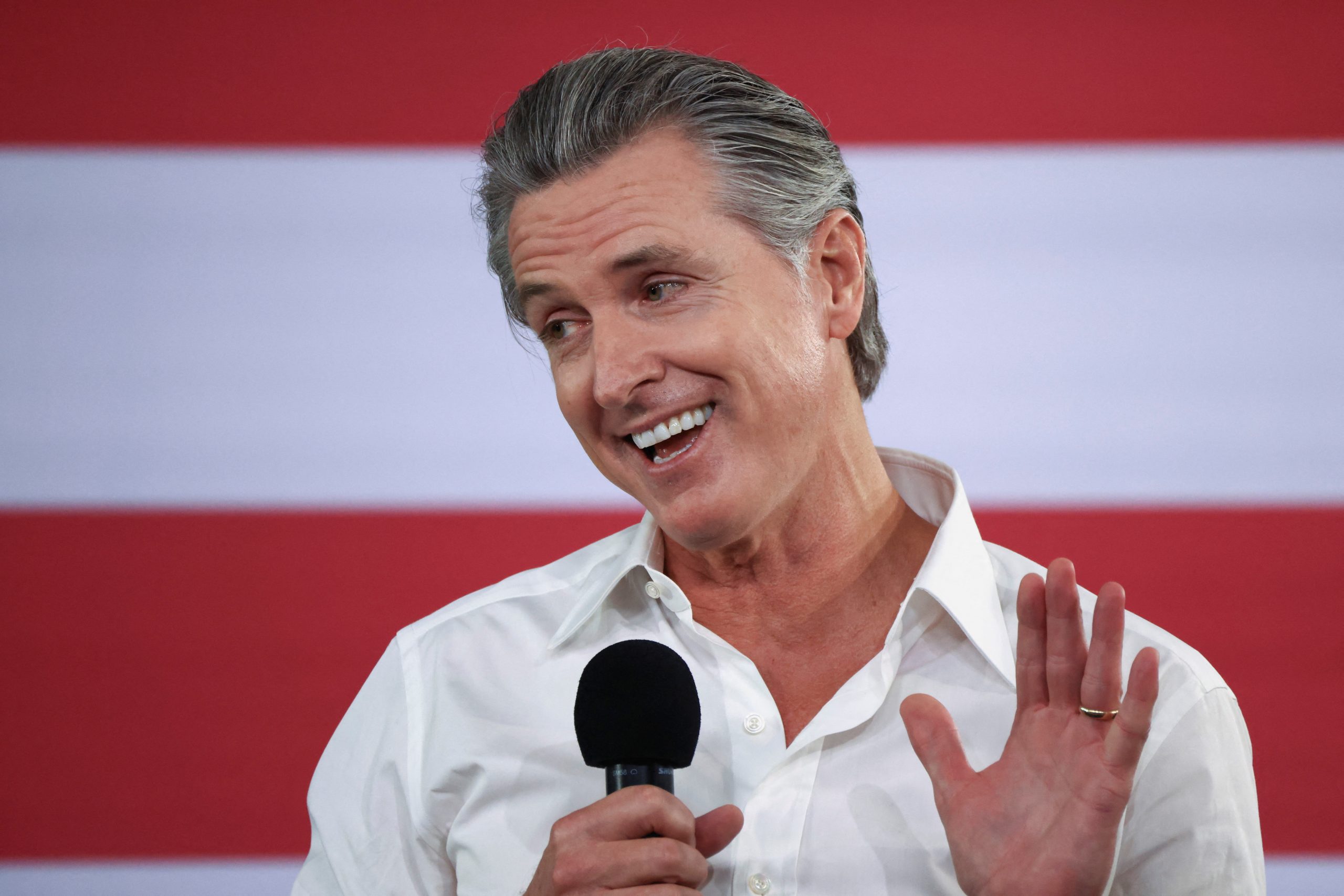
How Newsom responds in his final year is expected to follow him into an expected presidential primary run. Democratic political consultant Kelly Calkin said the governor is acutely aware that voters beyond California are focused on affordability, particularly the rising costs of housing and health care. “This really is a pivotal year for him,” she said. “What do voters in the rest of the country want to see? They’re feeling the pinch of affordability.”
During seven years in office, Newsom has pushed an expansive progressive agenda, often built around lofty goals that proved difficult to meet. He pledged to tackle homelessness, which has worsened during his tenure despite more than $24 billion his administration has spent on the issue. He began his term with a headline-grabbing proposal to provide six months of paid leave for new parents, but later scaled it back to a two-week increase, for a total of eight weeks, along with gradual boosts in how much the program pays.
In 2021, Newsom said the state would add 200,000 new subsidized child care slots by 2025, but the plan was delayed for two years and remains tens of thousands of slots short. He has since promised to resume the expansion this year.
On health care, Newsom campaigned in 2018 on establishing a single-payer public health care system, criticizing politicians who said it was too expensive or premature. He later pivoted to a goal of “universal coverage,” gradually expanding coverage for low-income Californians, including undocumented immigrants. That expansion was abruptly halted last year amid a budget deficit.
Supporters say Newsom has still reshaped state government in lasting ways. He expanded transitional kindergarten statewide, created the Office of Health Care Affordability to rein in rising medical costs, used regulatory power to pursue greenhouse gas reduction goals, and pushed the state to take a more active role in homelessness and mental health policy. Former Assembly Speaker Anthony Rendon said that after years of fiscal restraint under former Gov. Jerry Brown, Newsom began his term in 2019 with an unusually long list of progressive priorities. “In retrospect, it never seems like enough,” Rendon said.
Housing remains one of the most visible measures of Newsom’s record. About 40% of California households are considered housing-cost burdened, meaning rent or mortgage payments consume more than a third of income, according to U.S. Census data. Newsom ran on lowering those costs by boosting housing production and said it was “achievable” to build 3.5 million new homes by 2025. In 2024, the state added just under 120,000 new units, about a fifth of the annual rate needed to meet that goal. Newsom has since described the original target as a “stretch goal.”
Housing advocates argue that Newsom has nonetheless done more than any previous governor to push construction, citing expanded tax credits for low-income housing, laws easing zoning restrictions, and legal action against cities that fail to plan for adequate housing. Ray Pearl, executive director of the California Housing Consortium, said the administration has changed the trajectory of the issue even if results remain slow. He said he hopes Newsom will support a proposed $10 billion bond that lawmakers want to place on the ballot to bolster the state’s affordable housing fund.
In recent weeks, Newsom has pointed to modular housing as a potential next step. Speaking on The Ezra Klein Show, he said factory-built housing could lower costs but acknowledged political risks tied to labor concerns. An Assembly committee chaired by Buffy Wicks is expected to discuss the approach this year. Newsom said the issue holds “a lot of promise” and “a lot of political peril,” calling it a likely focus of legislative debate in his final year.
Health care and social services face growing pressure as the state confronts another budget shortfall estimated at $18 billion, following a $12 billion deficit last year. Programs overseen by the Health and Human Services Agency, which accounts for nearly 40% of the state’s general fund spending, are also projected to lose federal funding under President Donald Trump’s tax and spending bill.
During his two terms, Newsom expanded subsidized child care, increased cash assistance for low-income residents, appointed a state surgeon general focused on childhood trauma and the racial health gap, and incrementally expanded Medi-Cal coverage for undocumented immigrants. After implementation of the Affordable Care Act, more than 90% of Californians were insured when Newsom took office. His expansions pushed coverage to nearly everyone by 2023.
Last year, facing higher-than-expected Medi-Cal costs and the need to close a $12 billion deficit, the administration froze new enrollment for working-age undocumented adults. Later this year, undocumented immigrant adults are set to lose Medi-Cal dental coverage, and next year most will face monthly premiums, changes that health advocates fear will force some people off coverage.
Amanda McAllister-Wallner, executive director of Health Access California, said she worries the administration could consider further reductions. She said advocates had hoped the expansion would become a permanent baseline. “Health care has been an area where the governor has really made a name for himself,” she said, adding that further pullbacks would be deeply disappointing.
As Newsom prepares to deliver his State of the State address, supporters and critics alike are watching to see whether he doubles down on affordability, housing, and health care, or pulls back under fiscal constraints. The choices he makes in his final year may define not only his governorship, but his standing on the national stage.