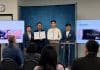
![On February 19, nurses affiliated with the California Nurses Association and National Nurses United protest outside USC Keck Hospital in Lincoln Heights over healthcare plan revisions and working conditions. After contract negotiations with hospital management broke down, the union began a seven-day strike that day. [Sangjin Kim, The Korea Daily]](https://www.koreadailyus.com/wp-content/uploads/2026/02/0223-strike.jpg)
The Kaiser healthcare strike is nearing one month, raising concerns about growing disruptions to patient care across California. In addition, nurses at USC Keck Hospital and USC Norris Comprehensive Cancer Center have joined a separate strike, further straining medical services in the Los Angeles area.
Approximately 31,000 healthcare workers affiliated with Kaiser Permanente began an open-ended strike on January 26. Of those, about 22,000 nurses work in Southern California. As a result, hospitals and clinics statewide, including facilities in Los Angeles, have reported operational challenges.
Hospital operations have already felt the impact of the Kaiser healthcare strike. A source in the Korean American medical community said some surgeries and treatments have been postponed or canceled. In addition, lines at pharmacies and laboratories have reportedly extended outside hospital buildings.
The source added that chemotherapy sessions have been canceled in some cases. Furthermore, some patients have been unable to obtain prescription medications, while specialist appointments have been delayed.
Tom Bicknell, 78, who is undergoing treatment for esophageal cancer, told ABC7 News that his chemotherapy sessions were canceled twice after the strike began. His caregiver expressed concern that interruptions in treatment could directly affect his survival.
![Patients stand in a long line outside the pharmacy at Kaiser Permanente Hospital in Baldwin Park. [X screenshot]](https://www.koreadailyus.com/wp-content/uploads/2026/02/0223-waiting.jpg)
CalMatters, a nonprofit newsroom, also reported on the case of Cecilia Ochoa, 50, who said she was unable to obtain antibiotics after being diagnosed with a urinary tract infection. Ochoa reportedly waited 24 hours to fill her prescription. At one pharmacy, nearly 100 people stood in line. At another Kaiser pharmacy, she was told that same-day dispensing had been suspended after a one-hour wait.
The union is seeking a 25% wage increase over four years and additional staffing. Union representatives argue that inflation reached roughly 8% in 2022, reducing real wages under the current contract signed in 2021. They also note that other unions secured raises reflecting inflation.
However, Kaiser has offered a 21.5% wage increase over four years. The company said it already pays industry-leading wages. Moreover, Kaiser stated that its proposal would not require raising insurance premiums. By contrast, the company argues that meeting union demands could jeopardize that guarantee.
Patients have expressed confusion over responsibility for the disruption. One patient said the healthcare system appears to prioritize money over patients.
Meanwhile, about 1,400 nurses at USC Keck Hospital and USC Norris Comprehensive Cancer Center began a seven-day strike on February 18 after contract negotiations failed. That strike is scheduled to end on February 26. Therefore, healthcare gaps in Los Angeles have widened further.
Kaiser said its emergency rooms, hospitals, medical offices and laboratories remain open. The company has shifted some appointments to telehealth and brought in outside staff to maintain essential services. However, some pharmacies have closed temporarily or reduced hours, and wait times may increase.
Kaiser advised patients with non-urgent prescriptions to use its mail-order pharmacy service, which provides free delivery within three to five days. The company said patients can check operating pharmacy locations and hours at kp.org/locations or kp.org/SCALOpenPharmacies.
BY HANKIL KANG [kang.hankil@koreadaily.com]