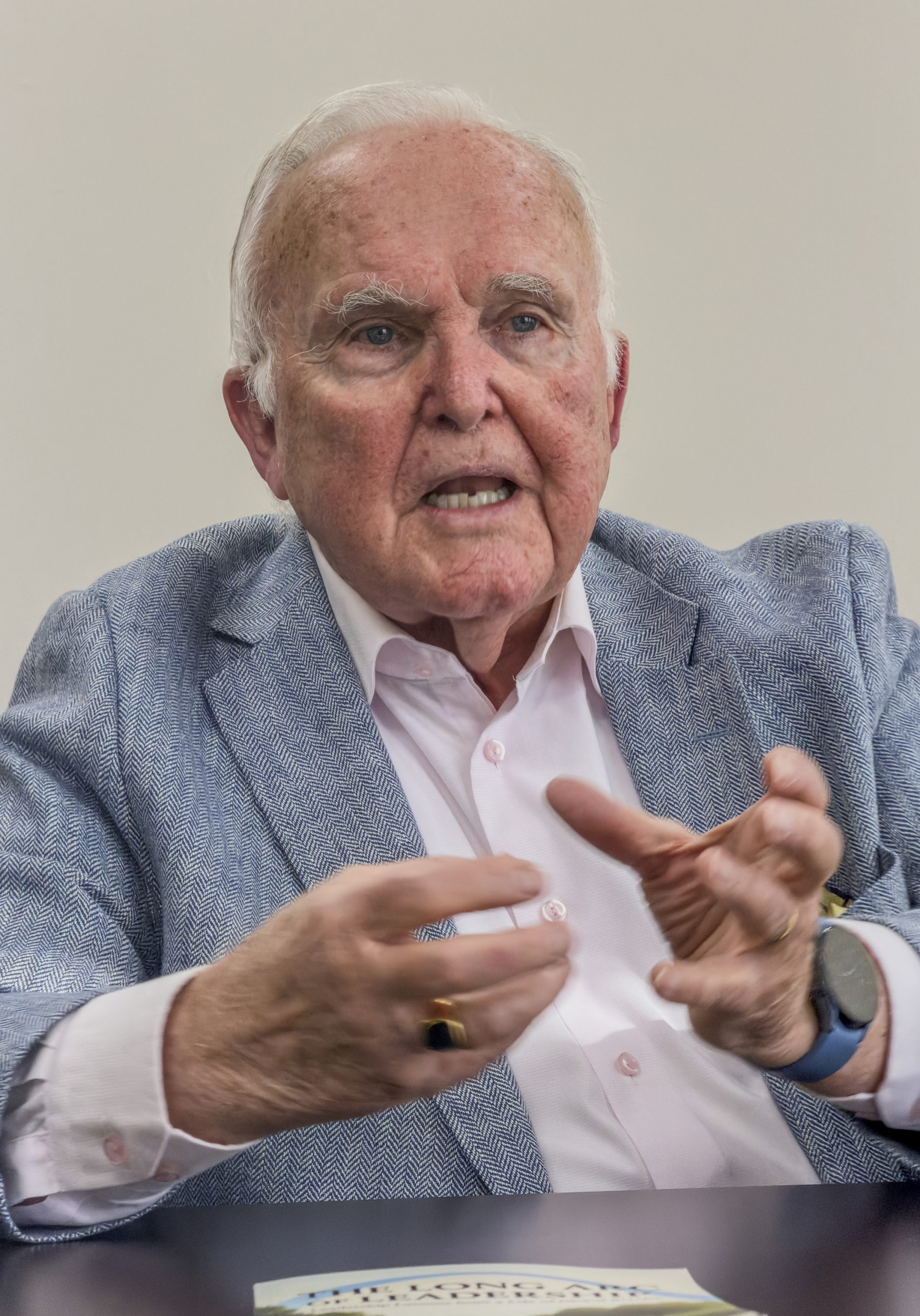
James Mayer, an international development expert who spent 45 years in U.S. public service, says that South Korea fundamentally reshaped his understanding of leadership. The former Director of the U.S. Peace Corps in Korea recently published a new book arguing that love, as respect rather than emotion, lies at the heart of effective leadership and service.
In his new book, The Long Arc of Leadership, Mayer writes that his time working alongside Korean colleagues led him to redefine leadership. In a recent interview, he said the project began as a personal memoir. However, it evolved as he reflected on how Korean Peace Corps staff, local communities, and American volunteers in Korea worked together to achieve shared goals.
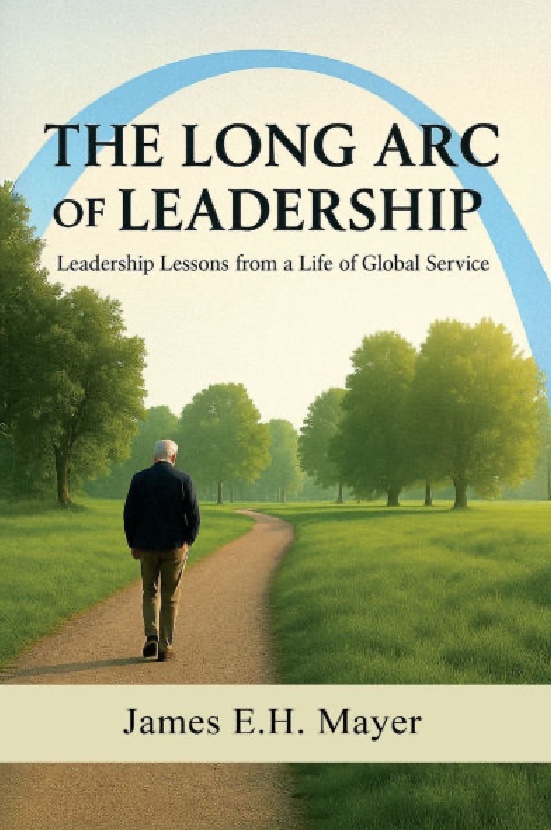
Mayer identified six practical principles in the book: walk slowly, listen deeply, lead lightly, trust wisely, hope strongly, and love always. Among them, he said, “love always” is the most distinctly Korean value. Therefore, he emphasized that leadership rooted in care and dignity can be more sustainable than authority driven by hierarchy alone.
“Love is respect, not emotion”
“Love is not an emotion but a matter of respect and dignity,” Mayer said. He explained that Korea’s cultural emphasis on preserving others’ face and maintaining relationships forms a powerful foundation for leadership and service. In addition, he noted that such values helped volunteers navigate challenges with humility and patience.
Mayer served as the country director of the U.S. Peace Corps in South Korea from 1978 to 1981. The Peace Corps, founded in 1961, dispatched about 2,000 volunteers to Korea between 1966 and 1981. Mayer was the organization’s final country director in Korea. During his tenure, he acted as the primary liaison between the Peace Corps and the Korean government, overseeing overall operations.
One defining moment came shortly after the May 18, 1980, pro-democracy uprising in Gwangju. Mayer recalled that just before a new group of volunteers boarded a flight from Seattle to Korea, officials from the Ministry of Science and Technology raised concerns about whether they should enter the country. He said he explained why the Peace Corps’ presence still mattered, and negotiations followed.
Lessons from crisis and compassion
Another lasting memory involved a program supporting people affected by leprosy. Mayer recalled visiting a leprosy village near Seoul with an NBC news crew. There, a mother wept as she said the greatest pain was not the illness but her children, who faced social isolation despite crossing mountains daily to attend school. That experience, he said, forced him to reconsider the meaning of service and leadership.
The story was scheduled to air on NBC’s Today Show. However, it was never broadcast because coverage was preempted after then-President Ronald Reagan was shot the day before.
Reflections on Korea’s growth
Mayer said he was confident early on about Korea’s growth potential. As he prepared to leave the country, he believed a major transformation was coming. He described former President Park Chung-hee as a complex figure who could not be absolved of human rights abuses but prioritized national survival and development while building an economic growth model suited to Korea.
However, Mayer also warned about the risks that accompany rapid growth. He said remarkable achievements can come at the cost of losing history and identity. Therefore, he urged younger generations not to become consumed by competition and speed. He also pointed to aging and generational divides, arguing that society must occasionally slow down to reflect on its broader direction.
BY KYEONGJUN KIM [kim.kyeongjun@koreadaily.com]
![Fans line up to purchase Son Heung-min jerseys at the LAFC uniform pop-up store set up at the Line Hotel on February 10. A video of Son wearing the new jersey plays on the wall behind them. [Kyeongjun Kim, The Korea Daily]](https://www.koreadailyus.com/wp-content/uploads/2026/02/0212-LAFC-100x70.jpg "LAFC unveils new jersey in Koreatown, expands outreach to Korean American community")