Israeli Consulate in LA Hosts Public Safety Symposium
AI-Driven Crime Prevention Technologies Introduced
More Than 60 Guests Attend, Including Korean American Leaders
Consul General: “We Look Forward to Continued Collaboration”
“Many communities are already operating security and safety programs powered by open-source technology.”
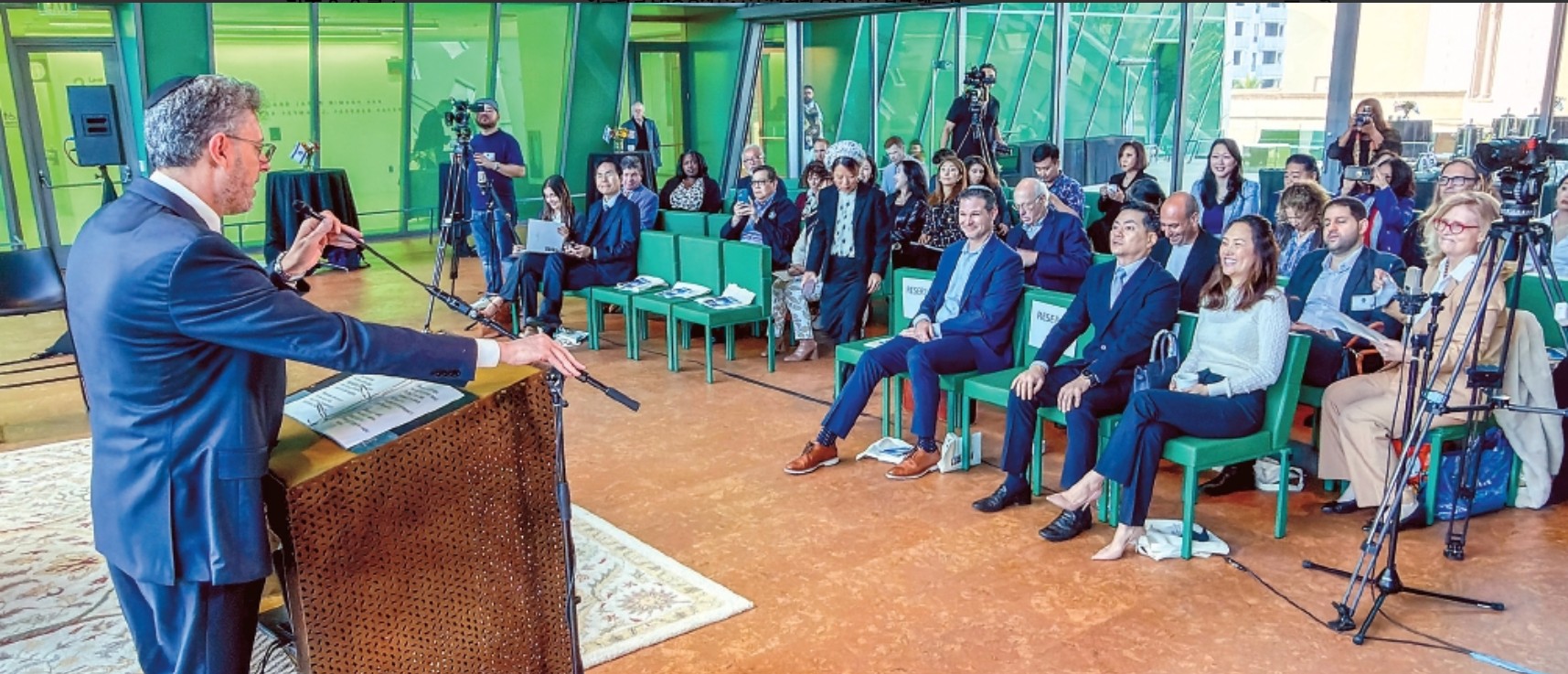
The Consulate General of Israel in Los Angeles hosted a Public Safety Symposium on Dec. 3, highlighting new AI-based public safety tools and community-driven strategies while seeking to deepen its collaborative network with the Korean American community.
Held at the Audrey Irmas Pavilion in Koreatown, the event brought together more than 60 attendees, including invited Korean American leaders. The symposium focused on how artificial intelligence and public networks can be leveraged to prevent crime and enhance community-level safety responses.
Consul General Israel Bachar, who organized the event, said he was pleased to share “transformative ideas” with neighboring communities, adding that he hopes the day’s dialogue will foster long-term cooperation.
Among the attendees were Robert Ahn, president of the Korean American Federation of Los Angeles; Chang-Yeob Lee, chair of the Olympic Station Supporters Association; LAFD Deputy Chief Emil Mack; and Alexander Kim of the OC Asian Pacific American Community Alliance.
Presentations followed from Ziv Wexler, CEO of Wexler Marketing, and Dr. Goni Saar, a public safety expert. Wexler emphasized the rapid expansion of AI security tools into households and businesses, noting the growing use of video-analysis capabilities in smart doorbells and security cameras for identity verification and situational awareness. “Products with these technologies are already on the market,” he said.
Dr. Saar explained that emerging systems integrate recognition capabilities from cameras installed in streets and commercial areas to identify threats, verify risks, and alert agencies in real time. He noted that similar functions are increasingly incorporated into Neighborhood Watch systems, using facial recognition to identify individuals and share findings with relevant authorities.
USC urban planning professor Adam Rose stressed that “the technology already exists,” adding that the central question now is how institutions and communities connect and apply these tools to strengthen public safety.
Olympic Division Captain Rachel Rodriguez discussed Koreatown’s existing collaboration structure, noting ongoing discussions with the Korean American community about improving quality-of-life issues. She said sharing safety strategies across communities—as done during the symposium—provides meaningful benefits.
LA Korean American Federation President Robert Ahn agreed, saying, “Connectivity within the community is incredibly important. We need to explore ways to apply these technologies and network ideas to our neighborhoods.”
The event also featured a cultural performance by singer Sungeun Cho (ShevaCho), who performed worship songs in both Hebrew and Korean, receiving enthusiastic applause. She shared her experience assisting veterans in Israel, saying she hopes to continue expanding cultural and spiritual exchange through music.