Iranian Americans’ perspective on Iran regime change became a central theme as Iranian American voices dominated discussions at the Conservative Political Action Conference (CPAC) on March 26 in Grapevine, Texas.
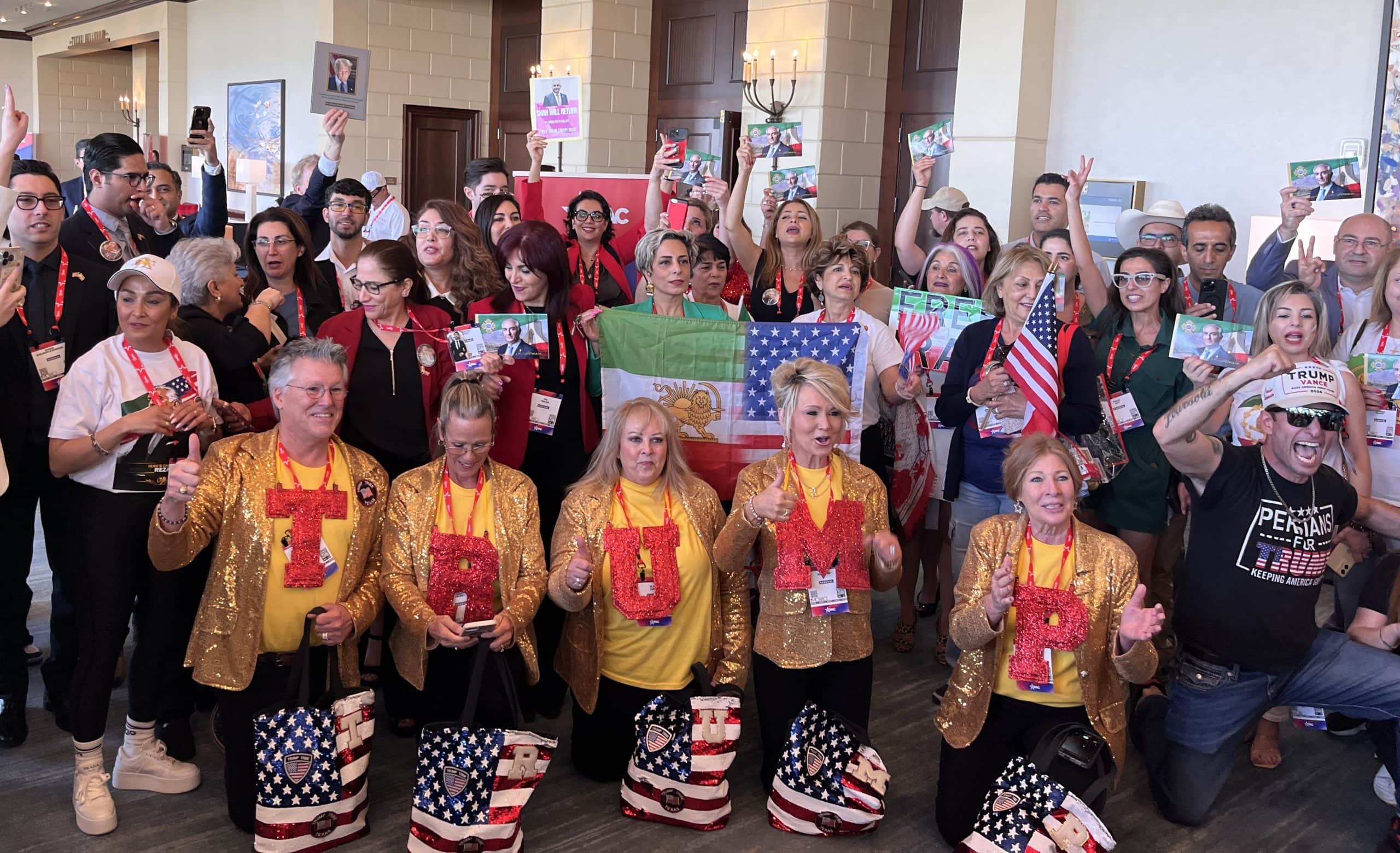
The annual gathering—widely regarded as the largest conservative event in the United States—was marked by chants supporting President Donald Trump and calls for regime change in Iran. The presence of Iranian American participants was notably higher than in previous years, signaling a shift in both visibility and political engagement within the community.
Kelly Miller, a decade-long CPAC attendee, remarked that she had never seen such a large Iranian presence at the event. Across the venue, signs advocating for Trump and urging political change in Iran were prominently displayed.
Many Iranian American participants expressed views that diverged sharply from mainstream media narratives. Melody Ramani, one of the attendees, argued that many Iranians see U.S. military actions as an opportunity to regain freedom.
She shared her personal story of fleeing Iran due to religious persecution, stating that the regime had forced her into a divorce because of differences in faith. Ramani emphasized that such experiences are often overlooked in broader media coverage.
Another participant noted that, contrary to some reports, recent U.S. actions have targeted key figures within the Iranian regime rather than civilians. According to communications with relatives in Tehran, civilian casualties have reportedly been limited.
The CPAC discussion reflects a broader consolidation of conservative viewpoints on global and domestic issues. The event served as a platform for shaping narratives around international conflicts, including tensions involving Iran.
Deputy Attorney General Todd Blanche, a figure closely aligned with Trump, addressed concerns about judicial bias in major U.S. cities. He criticized what he described as politically influenced rulings in jurisdictions such as New York and Chicago and pledged sweeping reforms to restore judicial neutrality.
Blanche also highlighted the SAVE Act, a proposed measure requiring voter identification at polling stations. While critics argue the policy could suppress turnout among vulnerable populations, Blanche framed it as a necessary step to ensure election integrity.
Beyond foreign policy, domestic concerns also took center stage. Mehmet Oz, head of the Centers for Medicare & Medicaid Services (CMS), addressed widespread hospice fraud, particularly in California.
Oz stated that although nearly one-third of the nation’s hospice facilities are concentrated in Los Angeles, only a small fraction operate effectively. He warned of fraudulent operations exploiting regulatory loopholes to collect federal healthcare funds, comparing the issue to the high-profile Minnesota welfare fraud case.
As the 2026 midterm elections approach, CPAC continues to function as a critical barometer for conservative priorities. From election integrity to healthcare oversight and foreign policy, the Iranian war narrative underscores the growing influence of grassroots voices in shaping national discourse.