
AI Immigration Enforcement Expands With Private Data Tracking
AI immigration enforcement in the United States is accelerating as federal authorities combine artificial intelligence with private-sector data to locate undocumented immigrants more quickly and across wider areas, according to recent reports.
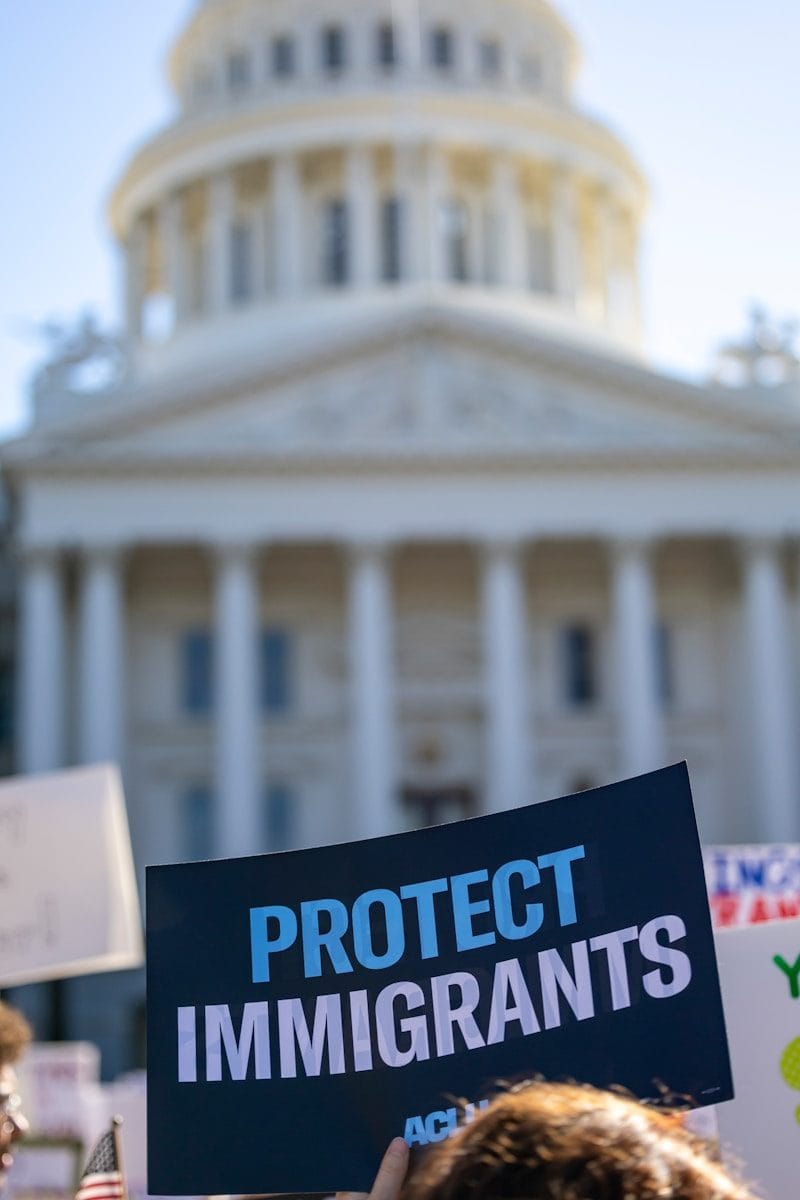
Analysts say the use of airport security records and large-scale data analysis has made immigration enforcement increasingly sophisticated.
According to a report released April 2 by the American Immigration Council, the U.S. Immigration and Customs Enforcement (ICE) has begun using a tactic known as “skip tracing,” which combines AI tools and private investigative contractors to locate individuals suspected of being in the country without legal status.
How AI Immigration Enforcement Works
Under the system, the U.S. Department of Homeland Security (DHS) provides private contractors with information on tens of thousands of individuals each month.
Companies then analyze public records, commercial databases, and online information to identify potential residential addresses and workplaces.
The process may involve the use of personal data such as names, dates of birth, and addresses. Some contractors also conduct field investigations, including verifying residences, identifying workplaces, and even photographing locations linked to individuals.
Information gathered through these methods is then used to support ICE enforcement operations.
The federal government signed contracts with 13 private companies late last year to provide these services, with the combined value of the agreements reaching approximately $1.2 billion. Several of the firms are led by specialists with backgrounds in military or intelligence sectors and focus on AI-driven large-scale data analysis to locate individuals.
Incentives and Expansion Concerns
Recent reporting by The Washington Post cited internal ICE documents indicating that contractors may receive up to 50,000 new target records each month.
Companies can also earn additional incentives if they confirm an individual’s location within one to two weeks.
The report suggested that the system could eventually expand to track more than one million people.
Critics warn that the emphasis on speed could compromise accuracy. Some experts say errors in facial recognition or other AI systems could lead to wrongful arrests.
Immigration attorney Brian Oh said AI-based analysis significantly increases the chances of locating undocumented individuals who have moved addresses. However, he cautioned that mistakes in automated systems could result in innocent people being detained.
“Incentive structures could encourage aggressive tracking focused on performance metrics,” he added.
Airport Data Sharing Raises Additional Questions
Airport-related enforcement has also increased.
A recent analysis by Reuters found that more than 800 arrests were made using traveler data shared by the Transportation Security Administration (TSA).
Authorities have received more than 31,000 traveler records through the Secure Flight program, which was originally created to identify potential terrorism threats.
Experts say the combination of airport data-sharing and AI-based analysis is expanding both the speed and scope of AI immigration enforcement across the United States.
As enforcement increases, immigration lawyers report rising concerns among immigrant communities, including Korean Americans.
Attorney Oh noted that inquiries about potential arrests during domestic travel have recently increased, warning that individuals with uncertain immigration status should exercise caution even when flying within the United States.