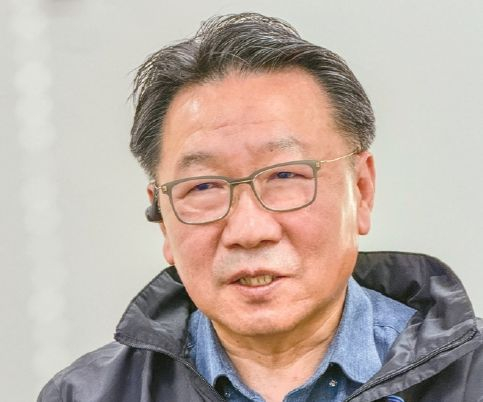
Tae-young Choi, CEO of Intercom, launched his business in 1985, when even the word “convention” was unfamiliar in Korea, and built it into a major convention company with revenue exceeding 50 billion won. The company has not recorded a single loss over 40 years in the convention industry.
While serving in counter intelligence unit during mandatory military service, Tae-young Choi analyzed overseas materials and first encountered the concept of the convention industry. At the time, Korea was preparing for the 1986 Asian Games and the 1988 Seoul Olympics, and he said he became convinced the field would grow.
During military leave, he visited multiple organizations—from the Korea Tourism Organization to the Japanese Embassy—to collect related materials. He entered the business immediately after his discharge, founding what later became Intercom.
Over the next 40 years, Intercom never posted a loss and rose to oversee major summit-level national events, including APEC (Asia-Pacific Economic Cooperation), the G20, and the Nuclear Security Summit.
Discussing the responsibility of hosting national events, Tae-young Choi said, “In national events, a single mistake can immediately damage a country’s image. In the end, everything comes down to know-how built through experience.” He added that he chose to be evaluated by results rather than personal connections or publicity, emphasizing that he has relied solely on performance in the field.
Even during preparations for the APEC event that received global praise last year, he said the process was not easy. Critics questioned whether Gyeongju was too small to host the event. Tae-young Choi said he made a comprehensive judgment based on the city’s historical significance and lodging infrastructure across nearby regions. The biggest challenge, he said, was staffing, as the area lacked enough trained professionals. He addressed the issue through intensive on-site training.
On what makes national events succeed, Tae-young Choi said, “Three things are essential: a stable national system, public participation, and cultural depth. Only when all three come together does the world truly respond.”
He said one of the most difficult tasks was operating the media center. About 4,000 foreign reporters arrived—far exceeding expectations—while the official media center could accommodate fewer than 1,000 people. He solved the problem by switching all press conferences to streaming and setting up separate outdoor reporting and networking spaces. Food trucks were installed in the area, and Dong-sik Ok, known as “Black-and-White Chef,” participated, which led to natural exchanges among reporters.
Despite years of steady growth, Tae-young Choi said Intercom faced a serious crisis during the COVID-19 pandemic, when events were canceled and the company was shaken. Even then, he said, the company remained profitable without relying on the government’s Employment Retention Subsidy (고용유지지원금).
Explaining how the company endured, he said, “I always keep core and non-core businesses at a 50–50 balance,” adding, “Because we prepared online conventions in advance, what had been a non-core business became critical during COVID.”
He said that even when events were fully suspended, employees continued coming to work every day for learning and brainstorming. As planning capabilities strengthened, revenue structure improved with the rise of hybrid events combining offline and online formats. He described this as “the most realistic example of how a crisis can become an opportunity.”
Tae-young Choi said he recently visited Los Angeles for the Korea Conference, an event supporting Korean startups entering the U.S. market. He said he hopes to apply four decades of accumulated expertise to elevate the conference’s quality.
He also said he regularly studies conventions across the United States in person. “Honestly, I often felt there was a lack of detail,” he said, adding that protocol—especially important in Asian culture—was particularly disappointing. He said Intercom plans to showcase its capabilities through the Korea Conference and is seriously reviewing expansion into the U.S.
Looking beyond operating events, Tae-young Choi said, “I hope the Korea Conference becomes a platform that shares knowledge and know-how with the world,” adding, “I want to create stages that serve a social role.”
BY WONHEE CHO [cho.wonhee@koreadaily.com]