California’s political landscape is showing signs of rapid change, with Republican gubernatorial candidate Steve Hilton emerging at the center of the shift as the current frontrunner in the race.
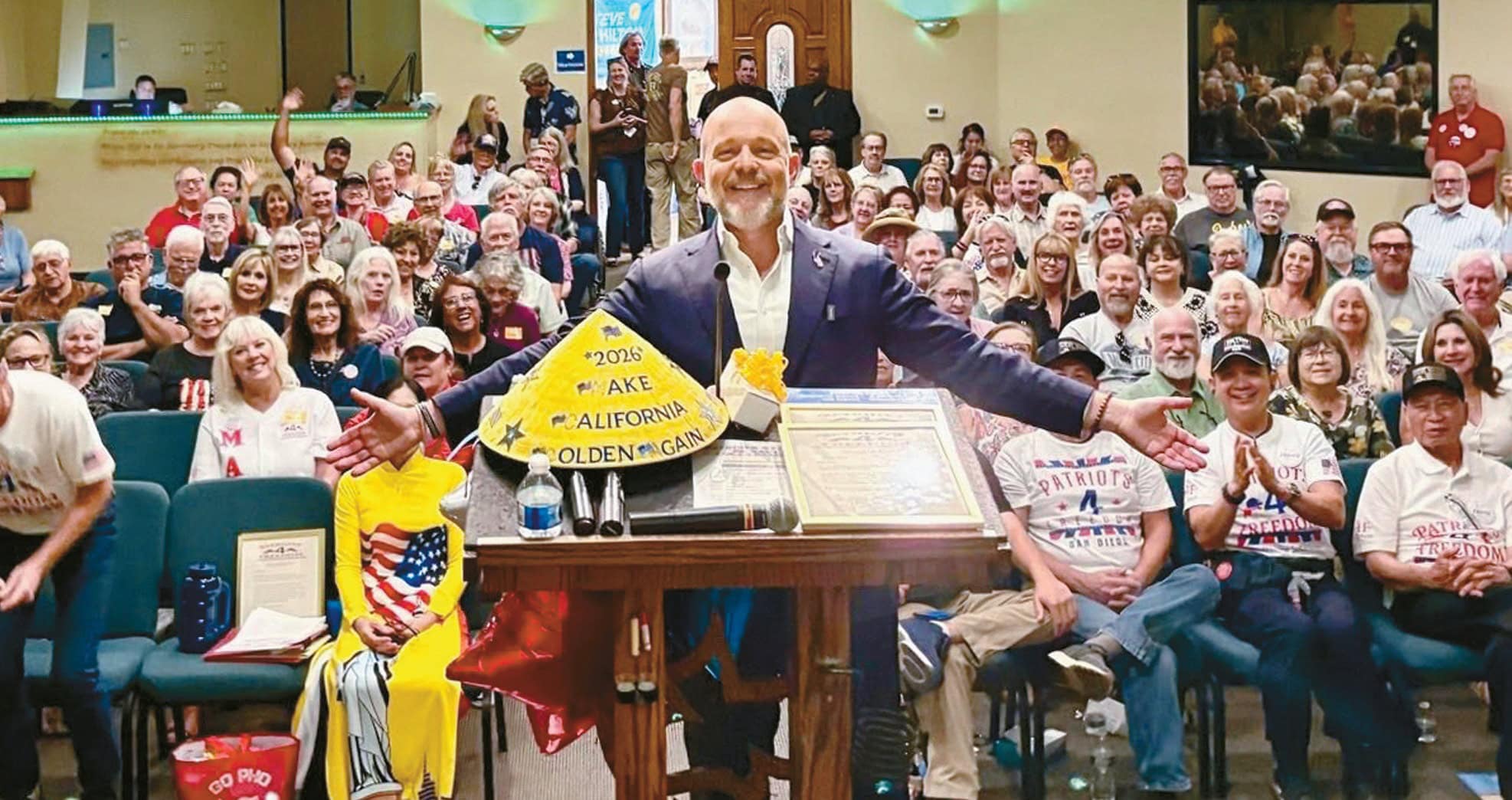
In an exclusive interview with The Korea Daily on April 17, Hilton made clear his intention to pursue sweeping structural reforms if elected governor. He sharply criticized the Democratic Party’s long-standing governance, particularly its welfare-driven bureaucracy, signaling a significant policy shift.
“I will establish a California version of DOGE—Cal-DOGE—to eliminate wasteful spending and corruption,” Hilton said. “We will streamline unnecessary government agencies and reduce the tax burden on residents and businesses.”
The upcoming election has drawn heightened attention as it could mark the first Republican governor in California in 15 years, since former Governor Arnold Schwarzenegger left office in 2011. Hilton, a former political commentator for Fox News, has gained momentum in the polls, fueling expectations among conservatives that California—long considered a Democratic stronghold—could shift politically.
He attributed his rise to voter dissatisfaction with prolonged Democratic control. “Voters are responding to change,” Hilton said. “This isn’t just about one candidate—it’s about a desire to move away from one-party dominance.”
Hilton also emphasized his identity as an immigrant. He became a U.S. citizen in 2021 and noted that he moved to California from the United Kingdom in 2012. “I understand what it means to seek opportunity in a new country,” he said. “I want to ensure Korean Americans and all immigrant communities have greater opportunities in California.”
Hilton’s tone toward Democrats was direct and forceful. “After nearly two decades in power, Democrats have become corrupt and arrogant,” he said.
Despite California’s economic strength—if it were a country, it would rank as the world’s fourth-largest economy, with a GDP of approximately $4.3 trillion as of the third quarter of last year—Hilton argued that residents are facing rising costs and an accelerating outflow of population.
“To fix this, we need to reduce unnecessary government spending and move toward a smaller, more efficient government,” he said.
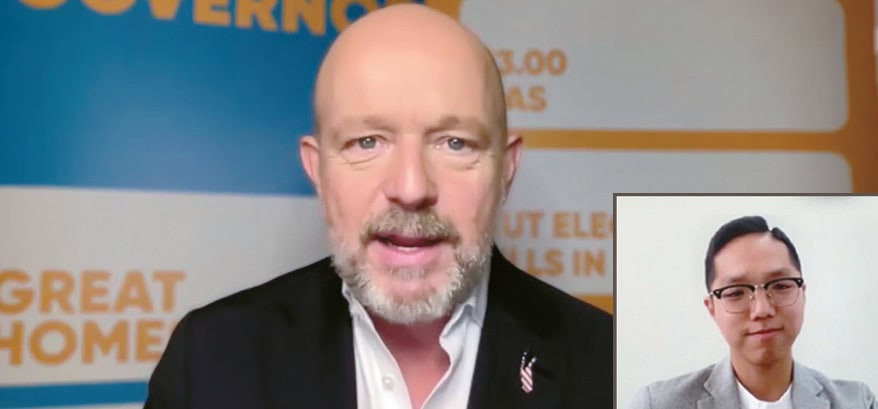
Q&A with Steve Hilton
Q: You are currently leading in the polls. What do you attribute this to?
A: “I’ve consistently ranked near the top since launching my campaign. I believe it’s because I’ve presented a positive vision—helping workers and small businesses struggling under heavy taxes and regulations, and making California a better place to live. The California Dream used to be real, but now everything is too expensive. My campaign is simple: lower gas prices to around $3 per gallon, cut energy costs in half, and eliminate state income tax for certain income brackets. These policies will meaningfully improve people’s quality of life.”
Q: California has long been dominated by Democrats. How do you assess that?
A: “For the past 16 years, Democrats have effectively controlled all branches of power—governor, lieutenant governor, attorney general, legislature, and even the state Supreme Court. The legislature, in particular, holds a supermajority. This is not a healthy political system. Despite that control, California now struggles with some of the highest poverty rates, unemployment, and cost-of-living burdens in the country. Business conditions are also among the worst. Naturally, voters are demanding change.”
Q: What would be your first priority as governor?
A: “The budget. It’s the key tool that shapes policy direction. I will cut government spending and implement tax reductions. There is significant waste and mismanagement in the current system. By addressing that, we can ease the tax burden on workers and small businesses. At the same time, we will stabilize utility costs, expand water supply for agriculture, and reduce excessive regulations. Ultimately, I want to move away from bloated welfare bureaucracy and build a more efficient government.”
Q: Can you work with a Democrat-controlled legislature?
A: “Right now, Democrats hold a two-thirds supermajority, meaning they can pass legislation without Republican support. I will work to change that by helping elect more Republican lawmakers. Even if that structure remains, I believe the legislature will be compelled to work with a Republican governor. My election itself would send a strong message that voters want change.”
Q: How do you differentiate yourself from fellow Republican candidate Chad Bianco?
A: “Voters have already shown their confidence in me through polling. I bring both political and business experience, along with a practical, problem-solving mindset. Before moving to California, I worked in the UK government advising the prime minister. Over the past three years, I’ve traveled across California listening to residents and developing concrete solutions. I also have the endorsement of President Donald Trump.”
Q: Is there a possibility of unifying with other Republican candidates?
A: “I’ve always said the door is open. I want to lead a united team.”
Q: Does former President Trump’s support pose a challenge in California?
A: “California Democrats rely heavily on attacking President Trump because they lack strong policy results from the past 16 years. In debates, they raise problems but fail to offer solutions. Regardless of that dynamic, Trump’s support will help energize Republican voters in what is ultimately a turnout-driven election.”
Q: What message do you have for the Korean American community?
A: “I want to be a governor who works alongside the Korean American community. I am an immigrant—and the only immigrant candidate in this race. I want all immigrant communities to have access to good jobs, homeownership, safe neighborhoods, and a better future for their children. That is the California Dream. My parents fled communism in Hungary, and I grew up in the UK. I understand what it means to seek opportunity in a new country. Government should support that journey—not stand in the way. I will work to expand opportunities for Korean American workers and small business owners.”