The city of Los Angeles has generated nearly $20 million in revenue through an artificial intelligence (AI)-powered bus lane enforcement program, highlighting its financial impact even in its early stages.
Launched in February of last year, the initiative has significantly outperformed initial projections, drawing attention to potential program expansion and how the funds will be allocated.
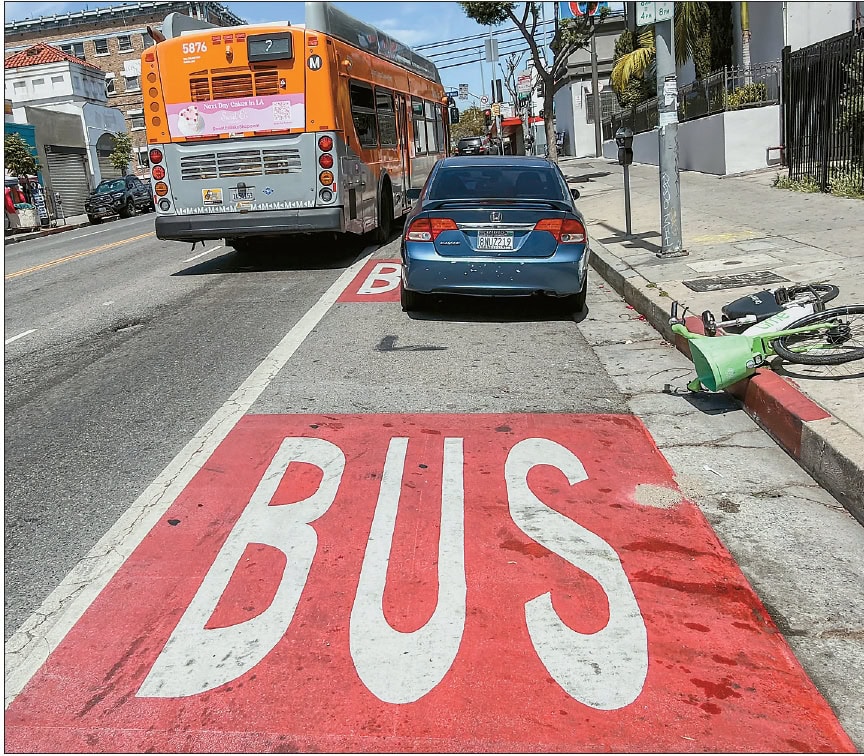
According to a report by the Los Angeles Department of Transportation, a total of 115,890 parking violations were issued between February and December through the M-ABLE (Metro Automated Bus Lane Enforcement) program. The resulting fine revenue reached $19,603,937, far exceeding the original estimate of approximately $5 million in net income.
The enforcement system is operated jointly by LADOT and the Los Angeles County Metropolitan Transportation Authority (LA Metro) following a memorandum of understanding signed in October 2024. The technology is powered by Hayden AI, which provides AI cameras mounted on buses to automatically detect vehicles blocking bus-only lanes and stops.
Vehicle owners identified through the system are issued a $293 citation for illegal parking. The program is currently active along major corridors, including Wilshire Boulevard, La Brea Avenue, Grand Avenue, and Olive Street.
Revenue from the program is distributed, with 75% going to LA Metro and 25% to the City of Los Angeles. In its report, LADOT recommended that net proceeds—after covering operational costs—be reinvested into road safety improvements. Potential uses include expanding traffic enforcement personnel, repainting road markings, upgrading signage, installing speed bumps, and increasing parking infrastructure. So far, LA Metro has spent approximately $3.09 million to operate the system.
City officials are also moving forward with plans to expand the program. Currently deployed on about 100 buses, the AI enforcement cameras are expected to be installed on more than 300 buses in the future. Additional deployment on DASH buses is also under consideration.
However, the long-term future of the program remains uncertain. Under current California law, automated camera enforcement for bus lanes is set to expire on January 1 of next year. A bill, AB 1837, is currently under review in the state legislature and would make the program permanent if passed.
Despite regulatory uncertainty, the program’s early success underscores its potential as both a traffic enforcement tool and a significant revenue source for Los Angeles.