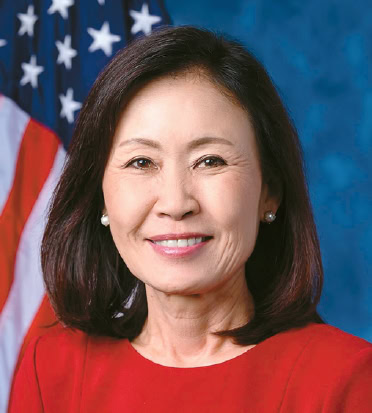
Former U.S. Rep. Michelle Park Steel (71), also known by her Korean name Eun Joo, has been nominated as the next U.S. ambassador to South Korea.
If confirmed, she will become the first ambassador to Seoul under the second administration of Donald Trump, filling a diplomatic post that has remained vacant for more than a year.
The White House announced on April 13 that Steel had been nominated and her name submitted to the Senate for confirmation. A source close to Steel said she is currently awaiting the confirmation process and will release a statement once it is completed.
The position has been unfilled since Philip Goldberg, who was appointed during the Joe Biden administration, stepped down in January of last year. Diplomatic observers expect Steel’s confirmation to proceed relatively smoothly, given her experience as a former member of Congress.
Steel has long been regarded as a key Trump ally in Southern California. She has consistently aligned herself with Trump politically and publicly expressed support for him on multiple occasions. She also served on a White House advisory commission on Asian Americans and Pacific Islanders, further strengthening her relationship with the former president.
Although known for her conservative stance, Steel is also considered a strong advocate of U.S.-Korea relations within the Republican Party. She has been vocal on issues such as North Korean human rights and efforts to reunite separated families, earning a reputation as a pragmatic policymaker.
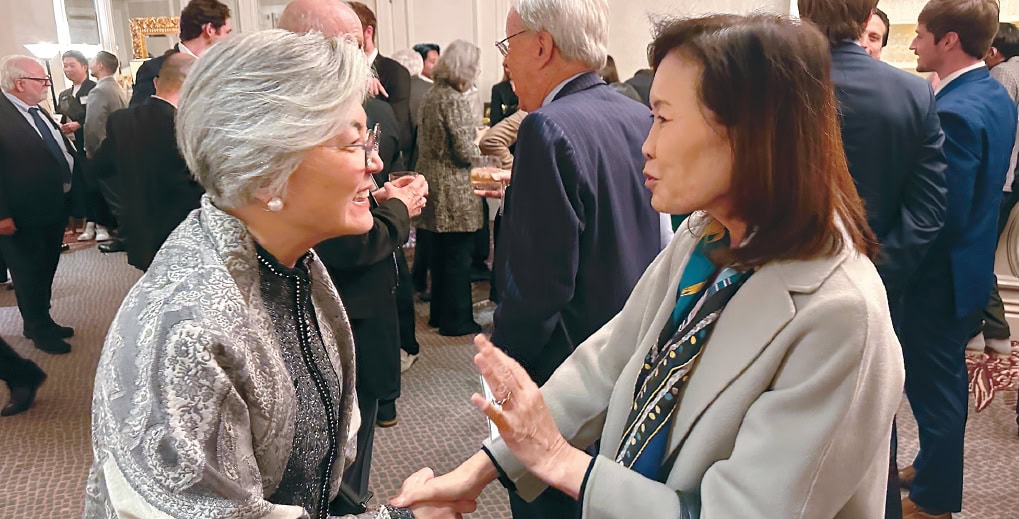
Her nomination comes at a time of shifting geopolitical dynamics in Northeast Asia, including tensions involving China and North Korea. Within Republican circles, her appointment is seen as a strategic move to ensure that Trump’s policies and messages are clearly conveyed to South Korea. At the same time, her nomination could pose diplomatic challenges for Lee Jae-myung’s administration amid complex foreign policy issues involving China and Iran.
Steel’s relationship with Trump dates back to 2015, when she endorsed him following his victory in the Republican presidential primaries. During her time in Congress, she welcomed Trump during visits to Southern California and publicly supported him at party events in Orange County. Notably, she voted against Trump’s impeachment in 2021, despite widespread criticism, underscoring her loyalty.
Trump, in turn, endorsed Steel during her closely contested 2024 congressional race against Democratic candidate Derek Tran.
Her nomination was reportedly recommended by House Speaker Mike Johnson, with support from former Speaker Kevin McCarthy and former House Speaker Newt Gingrich. Her close ties to Trump, legislative experience, and understanding of Korean and Japanese cultures were cited as key factors behind the recommendation.
During her time in Congress, Steel supported the Korea-U.S. Free Trade Agreement and actively advocated for North Korean human rights. She is also the daughter of North Korean refugees who fled during the Korean War.
In a 2024 interview with Korea Daily, Steel emphasized the importance of family reunification and discussed issues related to a potential end-of-war declaration on the Korean Peninsula.
If confirmed by the Senate and granted agrément by the South Korean government, Steel would become the second Korean American to serve as U.S. ambassador to South Korea, following former Ambassador Sung Kim. She would also be the second woman to hold the post, after Kathleen Stephens, who served in 2008.
Who is Michelle Park Steel?
Steel studied at Japan Women’s University before moving to the United States, where she earned a bachelor’s degree in accounting from Pepperdine University and an MBA from the University of Southern California.
In 2006, she became the first Korean American elected to the California State Board of Equalization, where she served for eight years. She later served as an Orange County supervisor representing the 2nd District.
Her public service roles have included commissioner positions with the Los Angeles City Fire Commission and the Los Angeles County Commission for Children and Families, as well as leadership roles in Korean American Republican organizations and federal advisory bodies.
In 2020, she was elected to the U.S. House of Representatives and won reelection in 2022, becoming one of the first Korean American women to serve in Congress.