Los Angeles tree safety crisis is raising alarms across the city, including Koreatown, as reports of hazardous trees surge and expose growing risks to public safety.
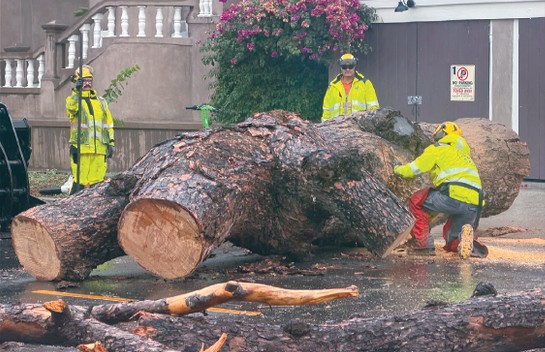
The term refers to incidents where trees fall onto sidewalks, roots lift pavement, or weakened structures pose an imminent collapse risk. Analysts say a combination of administrative shortcomings and limited funding has pushed Los Angeles’ urban tree management system to its limits.
Surge in Hazard Reports Signals Los Angeles tree safety crisis
According to data analyzed by Crosstown using the MyLA311 system, reports of hazardous trees reached 1,844 in December—marking the highest level since tracking began in April of the same year, when 703 cases were recorded. The upward trend has been steady, with 1,023 reports in July, 1,120 in September, and 1,466 in November.
Regionally, neighborhoods such as Woodland Hills (824), West Hills (429), Sherman Oaks (381), Reseda (373), and Van Nuys (325) ranked highest. Central areas closely connected to Koreatown, including Hollywood (221) and Mid-City (214), also showed elevated figures, raising concerns about risks in densely populated urban zones where falling trees could cause significant damage.
Structural Limits in Urban Forestry Management
Los Angeles maintains approximately 660,000 street trees, yet only about 220 personnel are responsible for their upkeep. This imbalance has led to an average maintenance cycle of 17 years—far exceeding expert recommendations.
Esther Margulies, a professor of urban planning at University of Southern California, criticized the timeline, stating that “a 17-year maintenance cycle is excessively long.” She added that recent storms and heavy rainfall have weakened soil stability, increasing the likelihood of tree collapses. “Delayed maintenance compounds structural defects, cost, and safety risks,” she said.
Koreatown Impact Highlights Growing Risk
Song Jung-ho, director of the Koreatown Youth and Community Center, noted that the situation is increasingly visible in Koreatown.
He explained that after strong winds or rain, trees frequently fall or large palm fronds drop, damaging vehicles and rooftops. In addition, expanding roots often lift sidewalks, posing hazards to pedestrians. “Even when these issues are reported, it takes a significant amount of time for the city to respond,” he said, adding that overall management and response systems remain insufficient.
Climate and Tree Selection Add Pressure
Tree selection practices have also contributed to the problem. Environmental group TreePeople reports that only 10% to 15% of Los Angeles street trees are native species. Many non-native trees were chosen for aesthetic appeal rather than climate resilience, making them more vulnerable to heat and drought.
In response, Los Angeles County has secured more than $6.5 million in state funding to expand tree planting, preserve green spaces, and improve air quality.
Experts emphasize that street trees are not merely decorative but a critical part of urban infrastructure. As the Los Angeles tree safety crisis intensifies, particularly in dense areas like Koreatown, calls are growing for proactive inspections and systemic reforms to prevent further incidents.