The lawsuit has been filed in the U.S. District Court for the Central District of California, alleging that a defect in the Forward Collision-Avoidance Assist (FCA) system in the Hyundai Tucson causes vehicles to brake suddenly without warning or obstacles. The plaintiff, Dennis Sperling, claims his Hyundai Tucson repeatedly experienced “phantom braking” events—sudden deceleration despite a clear road ahead—contending that Hyundai released the vehicles while fully aware of the safety risk.
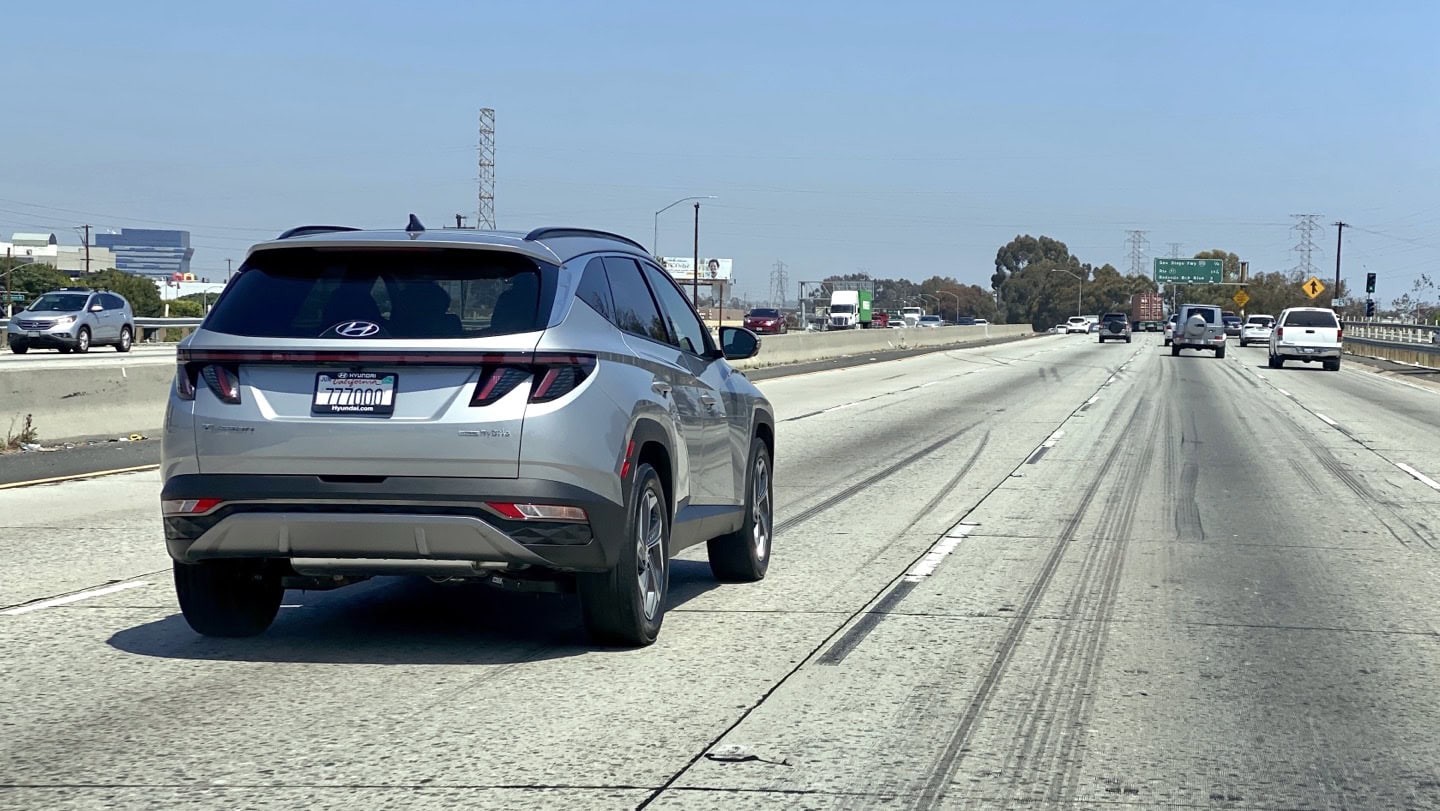
While no physical injuries or accidents have been reported in this specific case, the legal filing highlights a systemic concern regarding how automated safety features interact with real-world driving environments.
Allegations Based on Owner’s Manual Disclosures
The core of the plaintiff’s argument rests on the language found within the 2025 Hyundai Tucson owner’s manual. According to the lawsuit, Hyundai provides extensive disclaimers that the FCA system may fail to operate normally, stop functioning, or even activate unnecessarily depending on road and environmental conditions.
The manual notes several scenarios where the system might malfunction, including:
-
Light reflection on wet road surfaces.
-
Vehicles ahead with unusually high or low ground clearance.
-
Extreme temperature fluctuations near the front radar sensor.
-
Driving through tunnels or across iron bridges.
The plaintiff argues that these warnings prove Hyundai had prior knowledge of the potential for the Hyundai Phantom Braking Lawsuit triggers. By including such specific “limitations,” the legal team claims Hyundai attempted to downplay the severity and danger of unintended braking at high speeds, which could lead to rear-end collisions.
Broader Reliability Concerns for Hyundai and Kia
This legal action comes at a time when Hyundai Motor Group is facing increasing scrutiny over vehicle reliability. Beyond the specific issues mentioned in the Hyundai Phantom Braking Lawsuit, a recent Consumer Reports survey of over 380,000 vehicles highlighted significant grievances among Hyundai, Kia, and Genesis electric vehicle (EV) owners.
Commonly reported issues include:
-
Charging Failures: Inability to complete a full charging cycle.
-
Loss of Motive Power: Vehicles stalling or losing power while in motion.
-
ICCU Defects: The Integrated Charging Control Unit, a critical component for battery management, has been identified as a recurring point of failure.
If the ICCU malfunctions, it can lead to a depleted 12V battery, causing the entire electrical system to shut down and leaving drivers stranded. Consequently, many owners are now pursuing Lemon Law buybacks or joining separate class-action efforts to address these persistent electronic and mechanical flaws. The current case regarding phantom braking is now awaiting further court proceedings.
BY HOONSIK WOO [woo.hoonsik@koreadaily.com]