
The Shift Toward Consumer Refunds
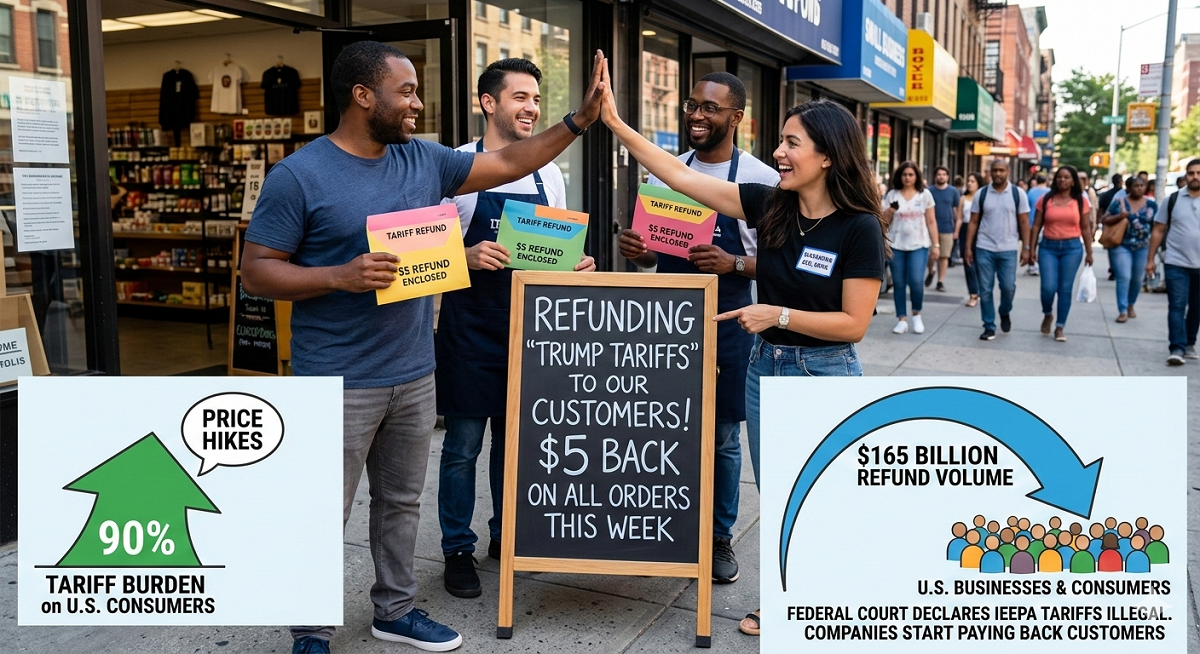
A ripple effect is spreading through the U.S. business sector following a federal court ruling that declared certain tariffs imposed under the International Emergency Economic Powers Act (IEEPA) illegal. Small and medium-sized enterprises (SMEs) are taking the lead in returning these costs to their customers. For instance, Alexandra Fine, CEO of Dame, announced that the company is automatically refunding a $5 “Trump Tariff Surcharge” per order to customers who paid it last year. Fine stated that if costs were imposed unlawfully, returning them is the right thing to do, noting that nearly $70,000 of their $100,000 tariff payments fall under the contested IEEPA category.
Multi-Billion Dollar Impact and Legal Battles
The financial scale of these refunds is staggering. The Penn Wharton Budget Model estimates that the total refund volume for IEEPA-related tariffs paid in 2025 and early 2026 could reach up to $165 billion. While smaller firms are focusing on consumer goodwill, major corporations are taking a more aggressive legal stance. Giants such as FedEx and Dyson have joined a growing list of companies filing lawsuits against the federal government to recover the hundreds of millions they paid in duties. These legal challenges argue that the administration overstepped its executive authority in using emergency powers to manipulate trade policy.
Economic Analysis of the Tariff Burden
The movement to refund comes amid data showing that the burden of these tariffs fell almost entirely on domestic shoulders. A recent study by the Federal Reserve Bank of New York revealed that nearly 90% of the tariff costs were passed on to U.S. consumers and businesses through price hikes. Despite the Trump administration’s claims that foreign exporters and governments would bear the brunt of the costs, the reality reflected in market prices tells a different story. As the refund process continues over the coming weeks, it highlights the complex economic consequences of using aggressive trade measures as a tool of foreign policy.