A new federal retirement savings proposal for workers who lack employer-sponsored plans is drawing attention.
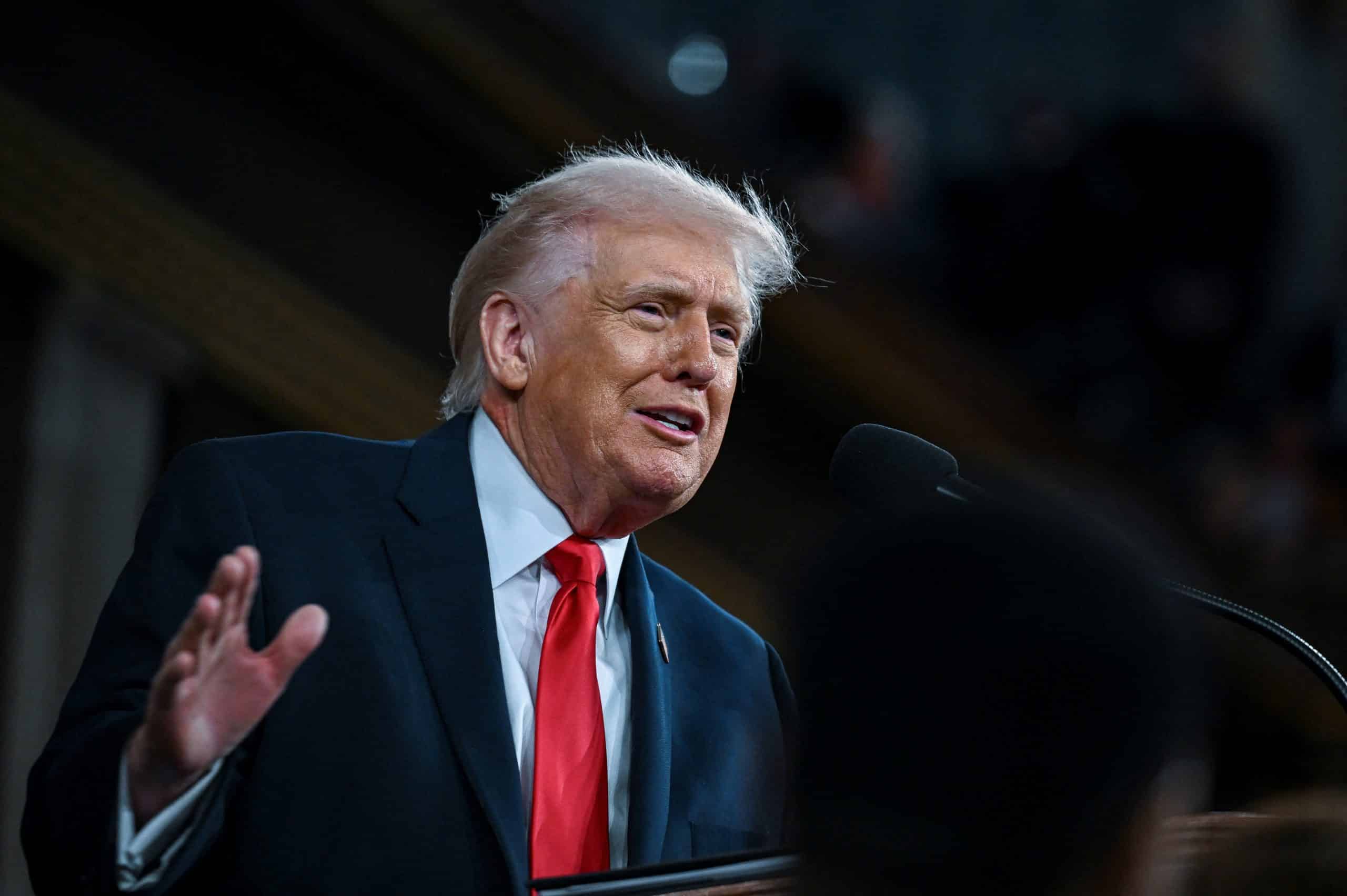
In a State of the Union address on February 24 at the U.S. Capitol, President Donald Trump publicly proposed a new defined-contribution retirement savings program for employees who cannot enroll in workplace retirement plans. The proposal would provide federal matching contributions of up to $1,000 per year for these workers.
According to the Investment Company Institute (ICI), nearly half of private-sector workers—56 million people—do not build retirement savings through employer-based plans. Without access to workplace plans, workers can struggle to use automatic saving through payroll deductions and may find it harder to take advantage of tax benefits, which can weaken retirement preparedness.
President Trump said the proposal would be designed using the federal employees’ program, the Thrift Savings Plan (TSP), as a model. He did not provide detailed information on eligibility rules or how the matching funds would be financed.
He described the proposal as a step to address what he called a serious gap between workers who can participate in workplace retirement plans and those who cannot.
After defined-benefit pensions tied to years of service declined, defined-contribution plans such as 401(k) accounts became a main way U.S. workers build retirement assets. Critics have long pointed to a structural problem: whether people save often depends on whether their employer offers a plan.
A survey by the National Institute on Retirement Security (NIRS) found that 80% of workers with balances in defined-contribution accounts held those accounts through their employers. In an ICI survey, nearly half of workers who had retirement savings in 401(k)-type or similar accounts said they would not have saved for retirement if their workplace had not offered a plan.
Industry reaction to the announcement was generally positive. In a statement, the ICI said the voluntary retirement system is already strong and access is expanding, adding that it hopes to work with the administration to broaden access for all workers and expand choice.
Criticism also emerged that the proposal largely repackages provisions of the SECURE 2.0 Act, which passed Congress in 2022. That law includes the Savers Match program, set to begin in 2027, which is designed to deposit up to $1,000—or $2,000 for married couples—into eligible workers’ automatic IRA accounts in the form of a federal tax credit.
Chuck Schumer, the Senate Democratic Leader, criticized the proposal in a post on X shortly after the speech, writing that President Trump was “stealing Joe Biden’s accomplishments” because he has done nothing for the middle class.
Fiscal policy experts also questioned whether the proposal could be funded. They said that without separate budget approval by Congress, it would be difficult for the federal government to carry out the matching contributions.
Romina Boccia, director of budget and entitlement policy at the Cato Institute, said that rather than adding another tax-advantaged account to an already complex system, the country needs a simpler approach such as universal savings accounts.
BY HOONSIK WOO [woo.hoonsik@koreadaily.com]