Tax Fairness and the SBA:
When Paying Into the System No Longer Counts
Tax fairness in the United States has long been understood as a simple principle: those who work hard, pay taxes, and contribute to society should have fair access to government benefits and opportunities. That belief is deeply embedded in the American ethos.
Or at least, it was.
For decades, the United States has prided itself on the idea that contribution—not nationality—defines belonging. Immigrants who built businesses, created jobs, and paid taxes were treated as full participants in the economic system, even if they were not yet citizens or resided abroad for part of the year.
That principle is now being called into question.
The U.S. Small Business Administration (SBA) recently announced sweeping changes to its loan eligibility rules, effectively barring businesses from SBA-backed financing if even 1% of ownership is held by a foreign national, or if any owner lacks a principal residence in the United States.
In practical terms, the policy declares that foreign-owned businesses—and even businesses with immigrant owners—are no longer eligible for government-backed credit.
Under the revised rules, all direct and indirect owners of an SBA loan applicant must be U.S. citizens or U.S. nationals, and all must maintain a primary residence within the United States or its territories. A long-standing exception that allowed up to 5% foreign ownership has been formally eliminated.
The most consequential shift concerns lawful permanent residents.
Historically, green card holders were treated on par with U.S. citizens for SBA loan purposes. Under the new guidance, however, permanent residents are completely excluded. They may not hold equity in an applicant business, an operating company, or even a passive asset-holding entity connected to the loan.
This represents not a technical adjustment, but a fundamental redefinition of who is deemed worthy of public credit support.
The ripple effects will be significant—particularly for Korean American banks and immigrant-focused small business markets, where SBA lending has played a central role. An executive in the Korean American financial sector noted that SBA loans have been “the most accessible policy-based financing tool for small businesses with limited collateral,” warning that excluding permanent residents could directly impact the backbone of Korean American self-employment.
The economic stakes are not trivial.
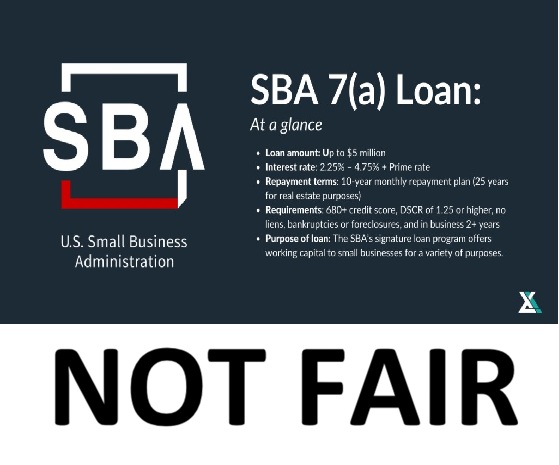
Last year alone, the SBA approved $33.8 billion in 7(a) loans, guaranteeing 75% to 85% of loans issued by private lenders. These programs have long served as lifelines for small businesses shut out of conventional credit markets.
The policy shift closely aligns with an executive order issued by Donald Trump in January 2025, titled “Protecting the Nation from Foreign Infiltration,” which directs federal agencies to use all lawful means to strictly enforce immigration laws.
Critics argue that the SBA’s new rules extend immigration enforcement into economic policy in ways that punish lawful contributors to the economy.
When details of the change became public on February 2, experts quickly labeled the move an anti-immigrant business policy. Immigrant-owned firms have historically driven job creation, tax revenue, and local economic growth. Excluding them from federal financial support all but guarantees slower expansion—and, in many cases, closure.
Industry data show that nearly 40% of U.S. small business owners are foreign-born, with entrepreneurs from India, Korea, China, and Latin America playing major roles across hospitality, food service, retail, and service industries.
The political backlash is growing.
As debate intensifies, one question looms larger than the policy itself:
If immigrants are good enough to pay taxes, create jobs, and sustain local economies—why are they suddenly unworthy of access to the very systems their contributions support?
For a nation built by immigrants, the answer may define the future of its small-business economy.
“Cutting off non-U.S. citizens from accessing Small Business Administration loans is as stupid as it is hateful, The Trump administration is hellbent on attacking the immigrant community, even when it hurts the American economy. These businesses create jobs, spur innovation, and propel our local economy. This decision will force businesses to close and people will lose jobs, shuttering the American dream for far too many.”
Rep. Dave Min
What do you think? Let us know.
Brian Choi [ichoi@koreadaily.com]