Food prices showed little sign of easing, posting their biggest monthly increase in more than a year and adding pressure on household grocery budgets, even as Korean American markets moved to limit price hikes through discounts.
According to the U.S. Department of Labor’s Consumer Price Index (CPI) released for last December, food prices rose 0.7% from the previous month, the largest monthly increase since October 2022. Compared with a year earlier, food prices were up 3.1%.
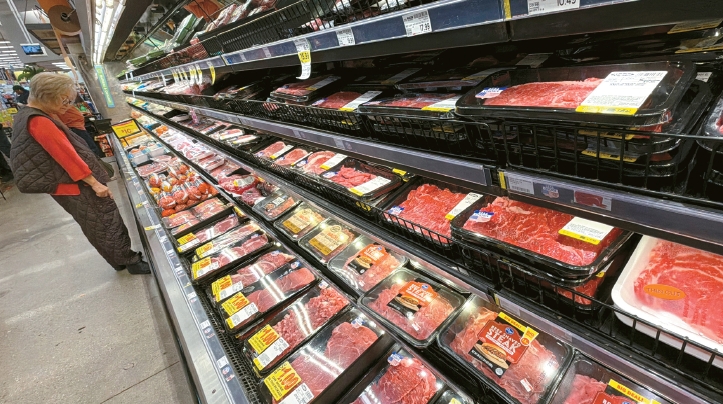
The increase was driven mainly by beef, coffee, and vegetables. Beef prices rose 1% in a month and surged 16.4% year over year. Coffee prices climbed 1.9%, while fruit and vegetable prices increased 0.5%. As price pressure spread across everyday food items, the grocery burden felt by households intensified.
An industry official at a Korean American market said the primary reason for the spike in beef prices is that the number of cattle has fallen to its lowest level in 70 years. The official added that drought and rising feed, fuel, and labor costs have slowed supply recovery, and because raising cattle takes at least two years, prices are unlikely to fall easily.
Because food is a highly visible expense, consumer pressure is expected to continue. As long as structural cost increases persist, short-term price stability is seen as difficult.
Amid this trend, Korean American markets are trying to lower perceived prices through price freezes and aggressive sales. For major items, meat prices such as beef have shown little change, while only some vegetables, including green onions, have spiked. The price of one bundle of green onions jumped 480%, from 25 cents to $1.45.
Jongpil Hwang, manager of Galleria Market Olympic, said prices have risen because year-end supply of Mexican produce became difficult. He added that vegetable and fruit prices are likely to remain stable or edge down slightly, while meat prices are expected to rise slowly but steadily.
As shoppers feel higher costs, Korean American market operators have expanded the scope and depth of weekend sales from Thursday through Sunday and strengthened brand promotion events.
Hwang said that in addition to advertised sales, each store location—such as Olympic, Vermont, and Valley—offers many special discounts. He noted that focusing purchases on sale items can help save money and suggested shabu-shabu as an alternative when beef prices are high.
Zion Market Oxford is selling two bundles of green onions for $1 and maintaining meat prices at previous levels. The store’s manager, Jan Yoon, said aggressive sales have made prices 5% to 15% cheaper than competing markets. The manager added that reward point deductions and a weekly 5,000-point promotion further reduce perceived prices.
Hannam Chain is holding major meat prices at levels seen a year ago through its winter sale. At its LA location, exclusive deals include Shine Muscat grapes at $8.99, one box of radish at $12.99, and one box of napa cabbage at $19.99. The chain has also expanded weekend discounts through brand promotions featuring CJ, Cheongjeongwon, and Samlip.
Eggs, which at one point exceeded $10 per carton of 20 due to an avian influenza outbreak, have fallen to $2.99. Other items that have become cheaper since the start of the year include a 20-pound bag of rice priced at $9.99–$10.99, apples at 79 cents per pound, and berries at $1 per pack.
BY EUNYOUNG LEE [lee.eunyoung6@koreadaily.com]