
More than 10 days after California’s plastic carryout bag ban took effect, reactions among Korean Americans are mixed as plastic bags disappear from market checkouts and shoppers adjust to paid paper bags and reusable options.
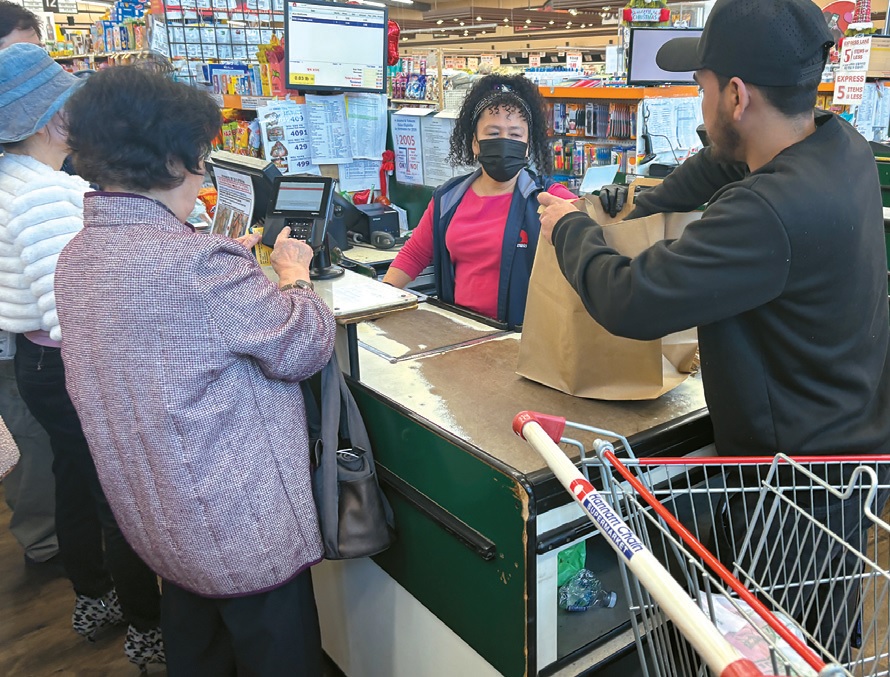
Since January 1st, the statewide plastic bag ban aimed at environmental protection under SB 1053 has been implemented across California. Korean-owned businesses, including markets, have been transitioning to selling paper bags for a fee and encouraging the use of reusable eco-bags.
When The Korea Daily visited Korean markets in LA Koreatown on January 7, it found that only brown paper bags were available at checkout counters. Customers had to purchase paper bags at 10 cents each to carry their items. However, shoppers paying with government assistance cards such as EBT or WIC were exempt from the paper bag fee.
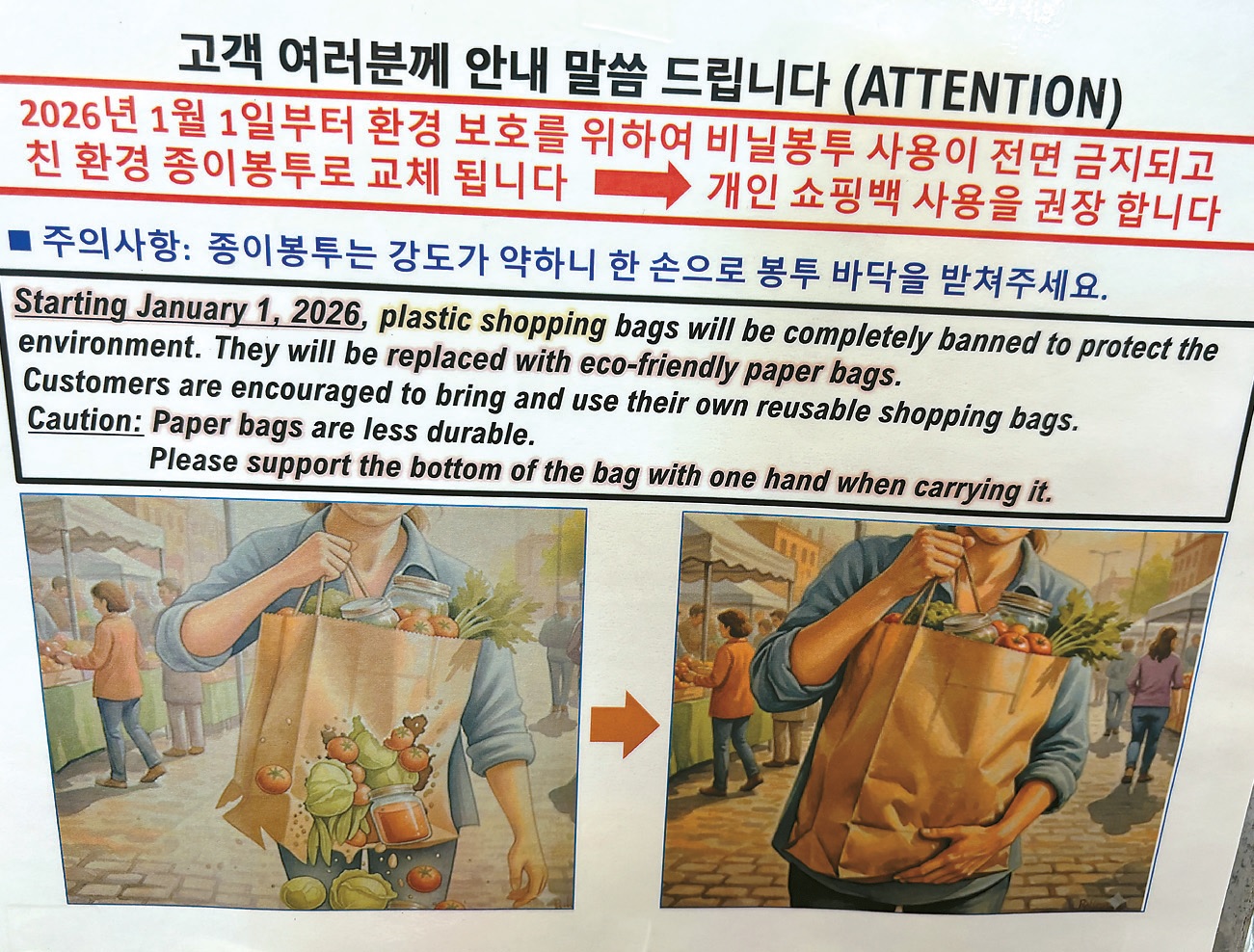
Notices explaining the change were posted at store entrances and near checkout areas. At Hannam Chain locations in LA, a notice stated that “starting January 1, 2026, plastic bag use will be completely banned for environmental protection and replaced with paper bags.” The notice also advised customers to support the bottom of paper bags due to their weaker durability.
Some shoppers were seen bringing their own shopping bags or reusable eco-bags in advance.
Yoon Ok Lee, 62, said, “Paper bags seem like they would tear easily when wet or when carrying heavy items, so I brought an eco-bag.”
Shoppers were frequently observed handling paper bags with extra care. Many supported the bottoms of their bags while moving after checkout to prevent tearing.
Hwa Ja Kim, 81, who was waiting for a taxi after shopping, said, “I usually take the bus, but since the switch to paper bags, I called a taxi because I was worried the bag with groceries might tear.”
Businesses are also feeling the impact of the change.
Sang Ryul Lee, a manager at Hannam Chain, said, “There are many complaints about inconvenience. Many customers used the plastic bags they took from checkout as small trash bags at home, but that is no longer possible.”
Korean American pharmacies are also affected. The regulation applies not only to grocery stores but also to large retail stores with pharmacies, convenience stores, food markets, and liquor stores.
Angela K., owner of Koryo Pharmacy, said, “Many customers buy multiple medications at once, which are bulky, and some medical devices are heavy. There is a risk that paper bags could tear. Seniors in particular worry that if a bag tears while they are moving, medications could be damaged or lost.”
Amid these changes, inquiries about eco-bags are increasing.
Young Kyu Kim, senior pastor of Bangju Church, said, “We host a monthly lunch for seniors, and this is the first time we’ve received questions asking whether we provide eco-bags.”
Only plastic carryout bags at checkout counters are banned. Thin plastic bags used in produce sections remain allowed and are made from compostable materials that break down in soil.
Businesses that violate SB 1053 face fines of up to $1,000 per day for a first violation, $2,000 for a second, and up to $5,000 per day for a third or subsequent violation.
Joong Chil Kim, president of the Korean American Grocers Association of California (KAGRO), said, “There may be inconvenience at first, but considering the environment, this is the direction we ultimately need to take. This kind of change is also necessary for the next generation.”
BY HANKIL KANG [kang.hankil@koreadaily.com]