Metro City Bank has completed its acquisition of First IC Bank, formally closing the Metro City Bank merger on Dec. 1 and becoming the third-largest Korean American bank in the United States by asset size. Despite the expanded footprint, the bank’s leadership says it will concentrate on stabilizing two Los Angeles–area branches rather than pushing rapid West Coast expansion.
The deal, first announced in March at an agreed value of about $206 million, closed roughly nine months later. Industry observers had expected the acquisition to intensify competition in Southern California, where six Korean American banks are already headquartered, and where Woori America Bank, Shinhan America Bank, and Hana Bank have also entered the market. With Metro City Bank now added to Southern California’s lineup, a total of 10 Korean American banks are positioned to compete in the region.
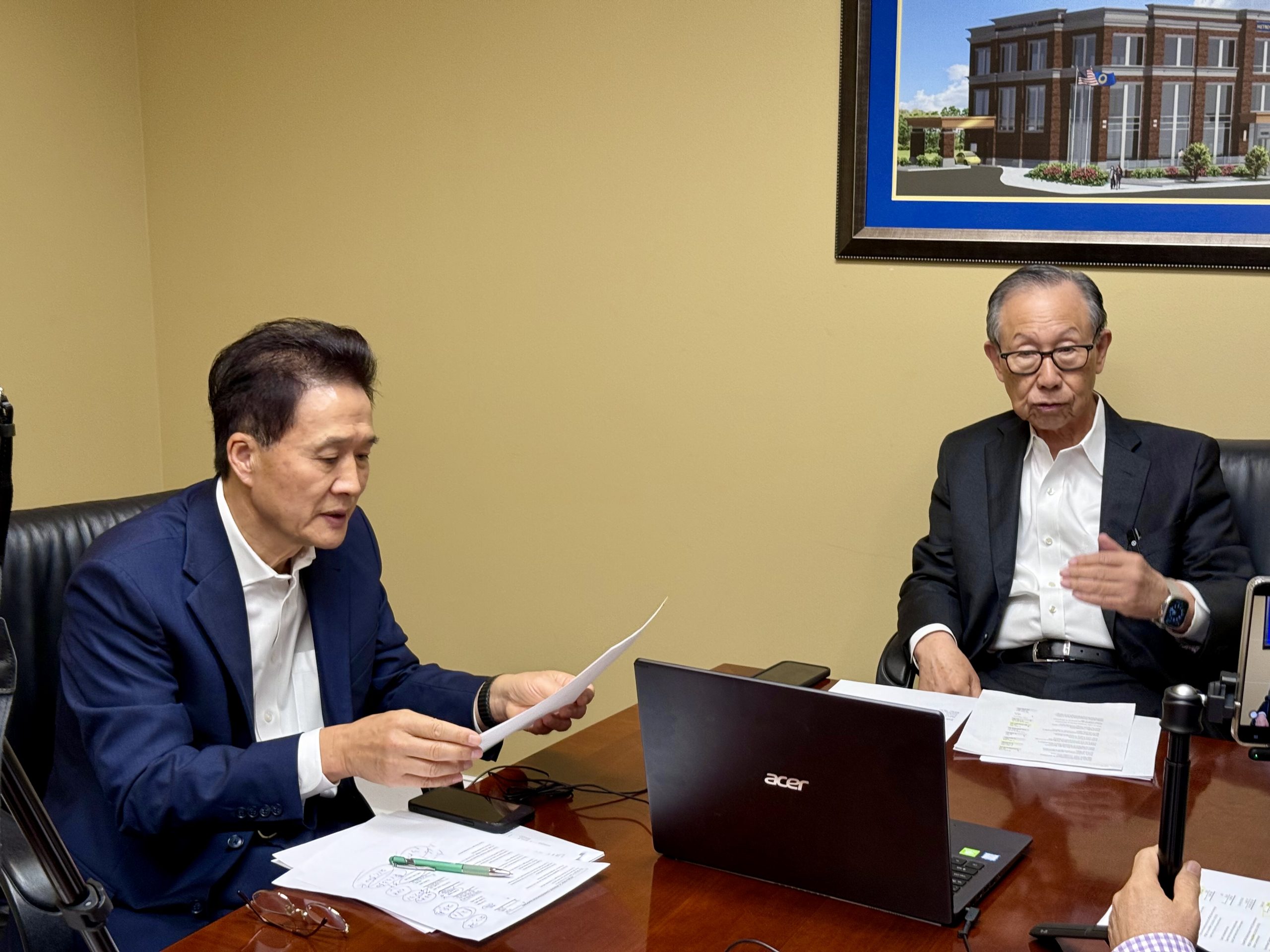
However, Metro City Bank chairman Nak Young Paek signaled a more cautious approach at a press conference held at the bank’s Atlanta headquarters on Dec. 3. “California is by no means an easy market,” Paek said. “Through the First IC Bank acquisition we now operate two branches in California, but that does not mean we are launching a full-scale West Coast expansion.”
He noted that the former First IC Bank branch on Wilshire Boulevard in Los Angeles has yet to generate strong results, and that the new Metro City Bank Fullerton branch will also need time to establish itself. “For now, we plan to focus solely on operating these two locations until they reach break-even,” Paek said.
Regarding further West Coast growth, Paek drew a clear line. He said the bank currently has no interest in entering other Western cities such as Seattle, underscoring that expansion beyond the two California branches is not on the near-term agenda.
As Los Angeles–based Korean American banks have moved aggressively into Georgia and other Eastern markets, Paek described the relationship as “competition among peers,” emphasizing both rivalry and mutual discipline. “Many LA banks have entered Atlanta,” he said. “They brought very aggressive strategies and a lot of know-how, so they are formidable competitors. But competition is a good thing. It pushes all of us toward more efficient management and ultimately benefits Korean American customers.”
Under the final terms of the transaction, First IC Bank shareholders will receive $12.19 in cash per share, totaling about $110.63 million, plus 3,384,588 shares of MetroCity Bankshares (MCBS) stock. The share component is based on an exchange ratio of 0.37 MCBS shares for each First IC Bank share.
The combined institution will be significantly larger. Based on third-quarter figures, the merged bank will have total assets of approximately $4.8692 billion, total deposits of about $3.64723 billion, and loans of about $4.25068 billion.
The branch network will also become denser. Metro City Bank previously operated 20 branches across seven states, while First IC Bank had 10 branches in five states. After integration, the combined bank will run 30 branches, with a 31st location to be added when the new Fullerton branch in Orange County opens on Dec. 8.
Because several branches overlap in markets such as Atlanta and New York, some consolidation is planned. The bank intends to merge the Norcross branches in the Atlanta area and the New York branches into single locations by next March or April, although overall branch consolidation decisions will be made after further review. All branch employees will be retained, and total staff is expected to reach about 350 after integration. The core systems conversion for the merged bank is scheduled for next Feb. 6.
Paek repeatedly highlighted the strong financial health of both institutions. “Among Korean American banks in the U.S., only two have a return on equity above 15 percent, and those are Metro City Bank and First IC Bank,” he said. “Because this is a merger between two strong banks, we expect to gain even more momentum. When a well-performing bank acquires a troubled bank, it can create a lot of headaches, but this time the structure is different.”
He also stressed the banks’ shared roots in their local Korean communities. “First IC Bank has deep roots in the Korean community in Georgia, and Metro City Bank has grown together with Korean Americans as well,” Paek said. “Now that the two banks have become one family, we will work to provide more support and make greater contributions to the Korean American community.”
BY HOONSIK WOO [woo.hoonsik@koreadaily.com]