Nighttime temperatures in LA have dropped quickly in recent days, raising fears among business owners and building owners about fire hazards caused by unhoused residents who light small fires to stay warm.
Fire risk is especially high in Koreatown and the area near the Downtown Java Market, where tent encampments are concentrated. Danny Jun, owner of the restaurant King Yubu, near Catalina Street and 8th Street, said, “The fires lit by unhoused people nearby can create a very dangerous situation, so I’m always on edge.”
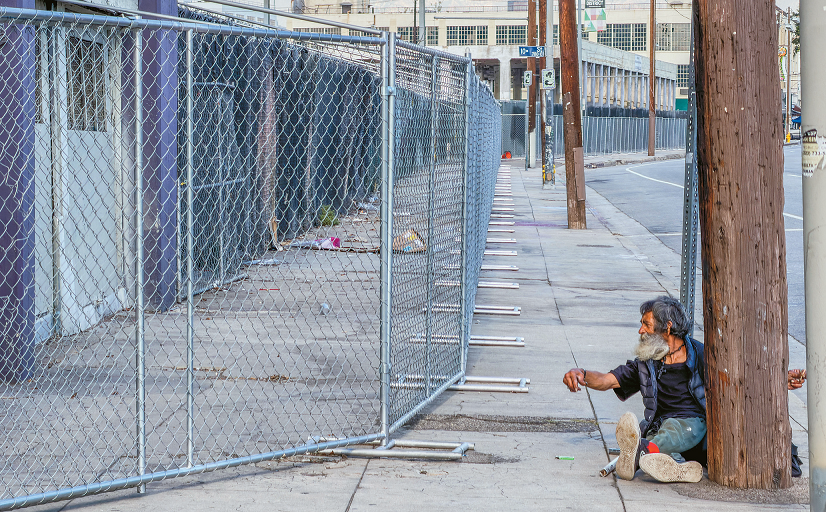
He added, “Last year alone, three cars parked around the restaurant were burned and completely destroyed,” and explained that more unhoused residents light fires around their tents in winter to warm themselves. “You never know when the flames might spread to a nearby building,” he said.
Worries are greater in the Java Market district, where large amounts of flammable materials—such as fabric rolls and cardboard boxes—are stored. The area is located within about one mile of Skid Row, which has a high concentration of unhoused residents and is classified as a fire-vulnerable zone. Youngji Kim, who works at a clothing company in the area, said, “Because of all the fabric, even a tiny ember can lead to a major fire. Every night I worry that a fire lit by an unhoused person might spread to a building.”

A security guard at the San Pedro Wholesale Mart, where many Korean apparel companies operate, said some clothing wholesalers and warehouses have installed double layers of barbed fencing around their buildings to prevent fire embers from spreading from nearby tents. He added that unhoused residents often use discarded cardboard boxes for bedding or to start fires, so merchants are advised not to leave cardboard outside their storefronts.
As temperatures fall, public agencies have responded with emergency measures. The LA Homeless Services Authority (LAHSA) announced on December 2nd, that it will operate emergency programs through December 5th —including opening temporary shelters and providing medical services—in cold-weather regions such as the Antelope Valley to protect unhoused residents from risks like hypothermia and pneumonia.
BY KYEONGJUN KIM [kim.kyeongjun1@koreadaily.com]