
The U.S. Supreme Court ruled 6-3 to uphold the Trump administration’s transgender military service ban, allowing the policy to take immediate effect despite ongoing legal challenges, according to reports by AP and CNN on February 6.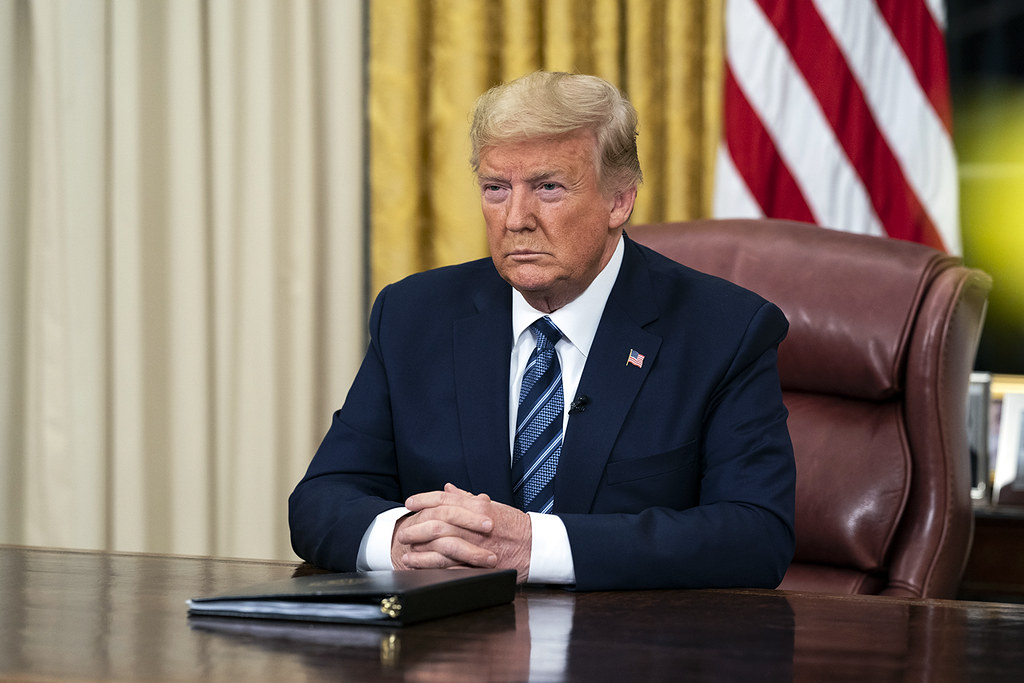
This decision permits the administration to enforce a policy that effectively bars transgender individuals from serving in the military. Out of the nine justices, six supported the ruling, while three dissented. CNN described the ruling as “a major victory for President Trump in the Supreme Court.”
Background of the Ban
The transgender military service ban traces back to Trump’s first term, when he signed a similar executive order. That policy, met with widespread opposition, was implemented only after a prior Supreme Court decision cleared the way.
Although the policy was later rescinded under the Biden administration, Trump reinstated it with an executive order on January 27 following his return to office for a second term.
Implementation and Legal Pushback
Following the executive order, Defense Secretary Pete Hegseth issued a directive in February halting the recruitment of transgender individuals and suspending all medical procedures related to gender transition within the military. Unlike the first-term policy, the updated version also barred currently serving transgender soldiers from continuing their service.
In response, 20 active-duty transgender service members filed lawsuits seeking to halt the enforcement of Trump’s order. While three federal judges initially blocked the executive order’s implementation, the new Supreme Court ruling overrides those decisions, fully reinstating the ban.
Financial Impact
A Congressional Research Service (CRS) report earlier this year revealed that the Department of Defense spent approximately $15 million between 2016 and 2021 on medical care—both surgical and non-surgical—for 1,892 transgender service members.
The ruling finalizes the current legal status of transgender military service following years of litigation.
![Delivery robots in urban areas including LA Koreatown and Hollywood have been involved in a string of incidents, blocking fire engine responses, crossing police lines at active scenes, and colliding with homes and motorcycles. [KTLA • Reddit capture]](https://www.koreadailyus.com/wp-content/uploads/2026/02/0226-delivery-robot-compile-100x70.jpg "Troublesome delivery robots damage gardens, snarl streets")
![Judy Baca, who faces allegations of embezzling $5 million, participates in work on “The Great Wall of Los Angeles” mural in 2023. [Sangjin Kim, The Korea Daily]](https://www.koreadailyus.com/wp-content/uploads/2026/02/0226-nonprofit-1-100x70.jpg "Nonprofit leaders accused of diverting millions meant for the vulnerable")
![A screenshot of the GoFundMe fundraising page created for Kyung Chang Lee. Donations are being collected to support the family of Lee, who was killed in the San Antonio, Texas, shooting. [GoFundMe capture]](https://www.koreadailyus.com/wp-content/uploads/2026/02/0225-KyungChangLee-100x70.jpg "Family of army veteran killed in San Antonio shooting launches fundraiser")
![Downtown Guadalajara in Mexico’s state of Jalisco, which resembled a war zone on February 22 amid arson and other violence by drug cartel members, appears quiet on February 24. The area, usually crowded with tourists and residents, saw a sharp decline in foot traffic and public transportation use. [Pablo Lemus Navarro/X account]](https://www.koreadailyus.com/wp-content/uploads/2026/02/0225-Mexico-100x70.jpg "Cartel leader’s killing sparks unrest, prompts Koreans to reconsider Mexico trips")
